
When Trains Changed the Time
แตะคำเพื่อแปลและบันทึกไว้ฝึกฝน
An 1840s traveller’s watch made by Vulliamy had one hour hand but two minute hands: one showed Greenwich time, the other local time. Rather than indicating a faulty mechanism, this unusual arrangement captured a period when travellers had to negotiate two systems of time.
British towns traditionally followed local solar time, so Liverpool was roughly twelve minutes behind Greenwich. Both readings could be legitimate within their own local systems. When journeys were slow, adjusting to these differences was manageable; there was less need for clocks across towns to agree.
Railways changed the scale of the problem. A timetable linking several places required a common reference, otherwise its times could be interpreted differently along the route. Railway companies increasingly adopted Greenwich Mean Time, or GMT, during the 1840s, although local time continued alongside it.
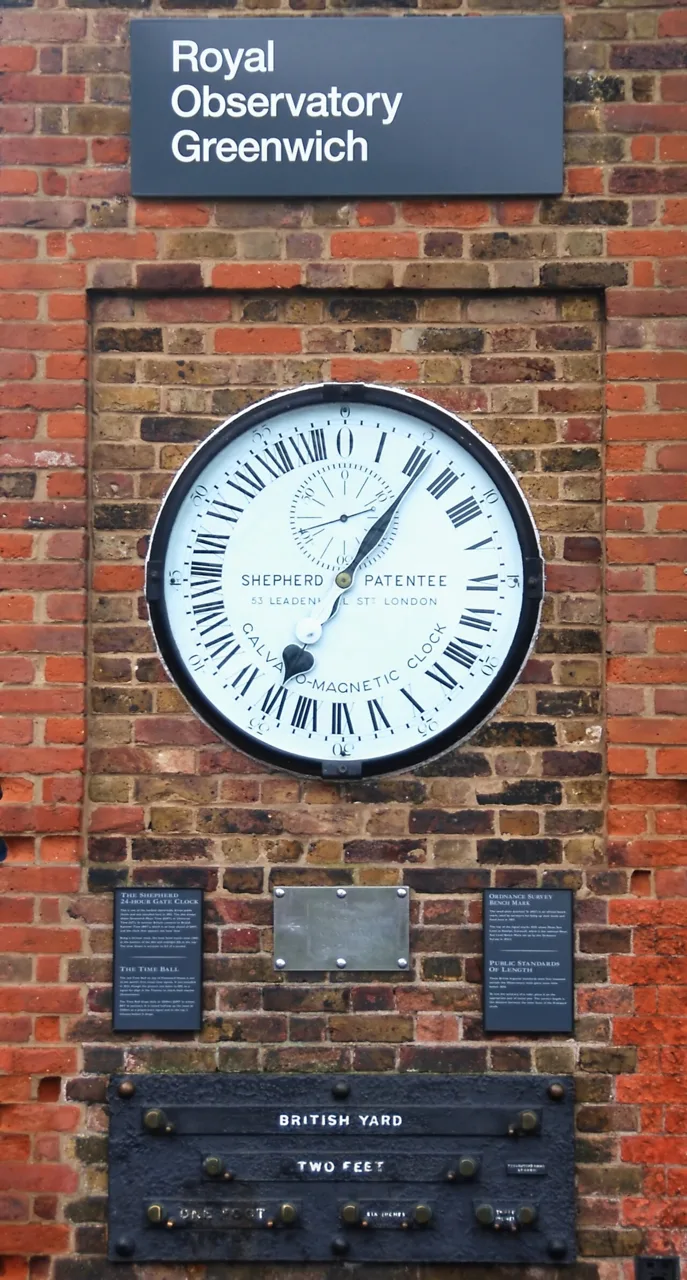
Agreement on a standard was only part of the task: clocks also needed to follow it. From 1852, electric time signals travelled from Greenwich through telegraph and railway wires, providing a practical means of coordinating clocks rather than leaving each place dependent on local observations.
GMT became the legal time standard in Great Britain in 1880, well after railway adoption had begun. The watch’s two minute hands therefore illustrate a gradual transition: a shared reference could become useful across a network before it displaced familiar local practice.
คำในย่อหน้าที่คุณใช้เวลาอ่านจะถูกเพิ่มในคำที่เคยเห็น หนึ่งครั้งต่อข้อความต่อวัน UTC เป็นการประมาณการพบคำ ไม่ใช่ความเข้าใจ
แหล่งข้อมูลและภาพถ่าย
เขียนสำหรับผู้เรียนภาษาอังกฤษโดยอ้างอิงแหล่งข้อมูลด้านล่าง
- Royal Museums Greenwich: History of the Royal Observatory
- Royal Museums Greenwich: Local time and the railways
ตรวจสอบล่าสุด:
ภาพถ่าย: Alvesgaspar · CC BY-SA 3.0 · ปรับขนาดแล้ว ภาพย่อถูกครอบตัด

ตรวจสอบความเข้าใจ
บทความข้อเท็จจริงพร้อมแหล่งข้อมูล ระดับ CEFR เป็นค่าประมาณ