
The Perfect Copy
แตะคำเพื่อแปลและบันทึกไว้ฝึกฝน
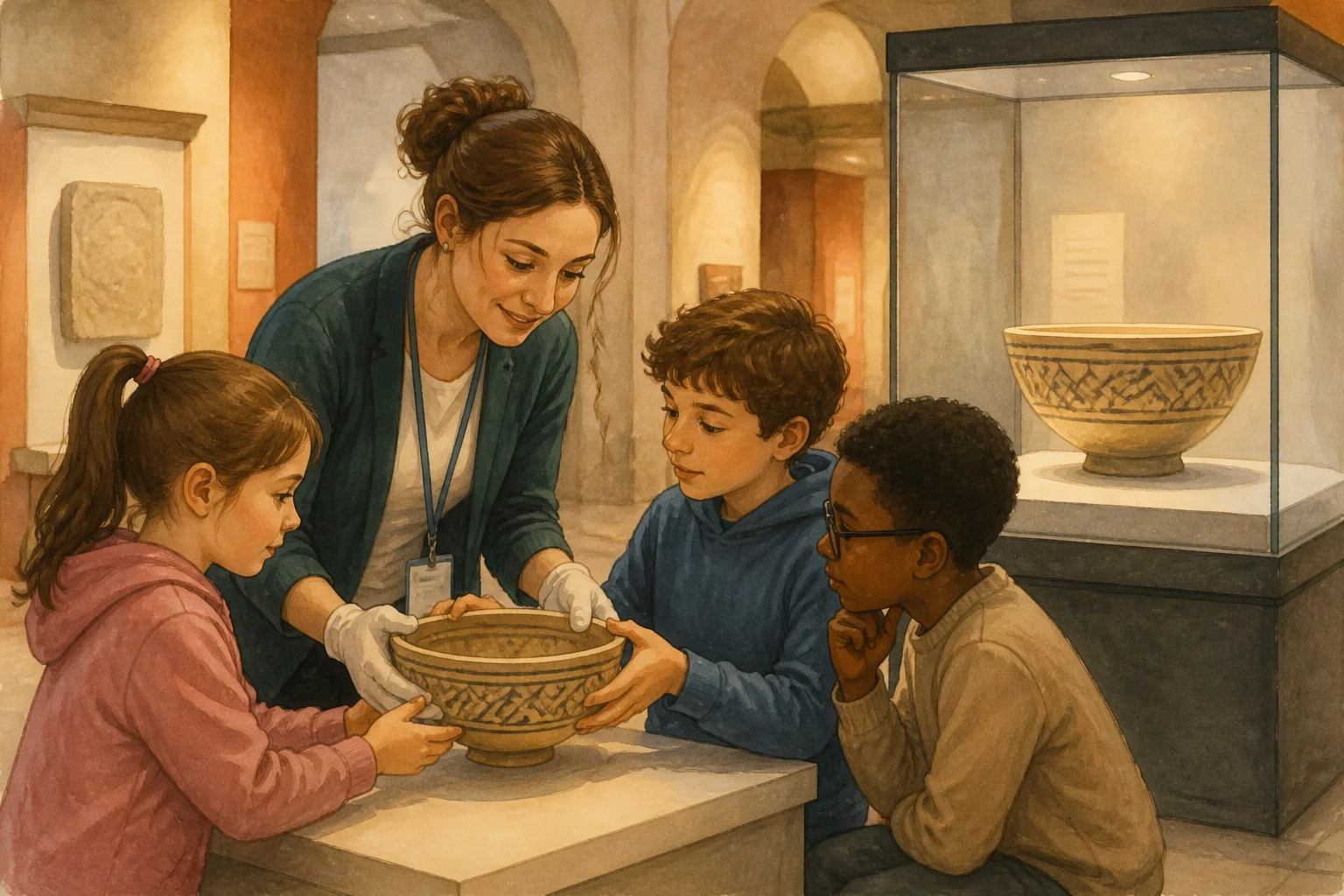
The museum commissioned a replica of a fragile bowl so that visitors could handle an object of the same weight and shape. The original remained in its glass case, protected from light and accidental damage. The replica travelled between classrooms in a padded box.
Miriam, the conservator, liked the arrangement. Children noticed details by touch that adults often missed behind the glass. She was less comfortable when a donor described the replica as a fake.
During a maintenance closure, both objects were placed on separate worktables. A colleague photographed the original for the catalogue but later realised that the wrong bowl appeared in the images. The error was corrected before publication; the replica had been properly marked underneath.
What unsettled Miriam was not the mistake but how little the donor noticed when she showed him the rejected photograph. He praised the object's unmistakable age and the patience of its anonymous maker.
She told him what he was looking at. He withdrew his praise immediately.
Miriam did not argue that the objects were interchangeable. The original had a history that the replica could not acquire by looking convincing. But the photograph had revealed something about the donor's response: he had spoken as though he could see that history directly.
For the next exhibition, she placed the replica beside a description of how it had been made. Visitors were invited to handle it before viewing the original. The sequence made resemblance useful without asking it to pass for ancestry.
คำในย่อหน้าที่คุณใช้เวลาอ่านจะถูกเพิ่มในคำที่เคยเห็น หนึ่งครั้งต่อข้อความต่อวัน UTC เป็นการประมาณการพบคำ ไม่ใช่ความเข้าใจ
ตรวจสอบความเข้าใจ
เรื่องแต่งต้นฉบับที่สร้างโดยมี AI ช่วย ระดับ CEFR เป็นค่าประมาณ