No se pudo verificar esta solicitud de IA. Inténtalo de nuevo.Completa esta comprobación para generar.ocultarmostrarCerrarNingún documental coincide con estos filtros.{0} minTodosComediaDocumentalDramaFantasíaComida y culturaHistoriaTerrorNaturaleza y animalesPersonas y trabajoRomanceCiencia y menteSuspenseSin categoríaOcultar guíaHechoCómo aprender con este vídeoGuárdala para practicarPulsa + en la traducción para guardar una palabra y repasarla después. No necesitas una cuenta.Tu palabra está guardada. Haz un cuestionario corto y repasa tus palabras guardadas en tu próxima visita.Empezar mi primera sesión →Empieza aquíMira el vídeo, traduce una palabra de los subtítulos y guárdala para practicar después. Puedes empezar sin una cuenta.Un vídeo corto. Una palabra nueva y útil.Tu primera sesión de aprendizajeTraduce una palabraDale al play y haz clic o toca una palabra de los subtítulos en inglés para traducirla. Elige el idioma de traducción en la ventana emergente.Mira 30 segundosTu progreso está vinculado a este navegador. Si borras sus datos, podrías perder el acceso.Continuar en {0}Seguir viendoPalabras listas para repasar: {0}No se pudo cargar tu próxima sesión. Inténtalo de nuevo.Prueba una película ahora. Puedes crear una cuenta después.Buscando tu próxima historia…Tu próxima historiaNo hay películas nuevas con estas opciones. Prueba otro nivel o género.Una historia para tu nivel e interesesRepasa tus palabrasCrear una cuenta gratuitaRetoma donde lo dejasteRepasar palabras guardadasRepasa las palabras que guardaste de las historias que viste.Guarda tu progresoNo se pudieron guardar tus preferencias. Inténtalo de nuevo.Tus preferencias están guardadas en tu cuenta.Ver esta películaB2–C1 · AvanzadoA1–A2 · PrincipianteB1–B2 · IntermedioNo se encontraron películas. Prueba otro filtro u orden.No se pudieron cargar las películas. Inténtalo de nuevo.Cargando más películas…Sin imagen{0} vistasVer {0}Palabras por nivelCargando…SiguienteCrea una cuenta o inicia sesión para activar tus ventajas Premium.Consigue límites diarios más altos con Premium.Límite alcanzadoInicia sesión para suscribirteSuscribirseSubtítulos automáticosInglésSalir de pantalla completaPantalla completaNo hay subtítulos traducidos disponibles para este vídeo.AutomáticoElige un idioma para mostrarlo debajo del inglés. Vuelve a elegirlo para desactivarlo.DesactivadoEl idioma seleccionado no está disponible para este vídeo. Los subtítulos en inglés siguen activados.Idioma de subtítulosComparar Free y Premium →2,99 €/mes o 19,99 €/año, con facturación anual.Crea hasta {0} textos con IA usando tus palabras y {1} imágenes para historias al día.Sigue aprendiendo con PremiumObtén más traducciones al día y crea más textos e imágenes con IA a partir de tus palabras.AnteriorCrea una cuenta gratuita para conservar tu progreso en todos tus dispositivos.Usa todas las palabras antes de comprobar.Preguntas en tu práctica: {0} / {1} · Todos los niveles.Respuesta correcta: {0}Buscar otra películaComprobarElige un nivel y empieza un quiz corto. Reintentar preguntas siempre es gratis.Cuestionario completado¡Correcto!Aún no hay preguntas de este nivel. Prueba otro nivel.No se pudo guardar tu respuesta. Inténtalo de nuevo.Nivel orientativo: {0}Primer intento: {0} / {1}Leer subtítulo (pista)No del todo. Inténtalo de nuevo.No se pudo cargar el cuestionario.Cargando cuestionario…Escribe las palabras que faltan…Revisar erroresPracticar {0} másNo hay preguntas nuevas de este nivel. Prueba otro nivel o repasa tus preguntas.No hay preguntas de este nivel en tu práctica. Elige Todos los niveles para repasarlas.Haz clic en las palabras para formar la frase.Pregunta {0} / {1} · Correctas: {2}Pregunta {0}Repetir escena · {0}Reintentar esta preguntaIntentar de nuevoNivel: {0}Ronda {0}Ronda completadaTus últimas respuestas: {0} / {1} correctasEmpezar quiz de {0} preguntasMejor respuestaComprensión de la escenaPalabra que faltaCompleta el espacioSignificadoMismo significadoOrden de las palabrasOtra vezOtra vez deja esta palabra pendiente para hoy. Vuelve a abrir Estudiar palabras para repasarla.¡Repaso terminado! Las palabras marcadas como Otra vez siguen pendientes para hoy. Abre Estudiar palabras cuando quieras continuar.FácilGuarda una palabra de un subtítulo o añade una arriba para empezar a practicar.DifícilNo se pudieron cargar tus palabras. Vuelve a pulsar Estudiar palabras.Preparando tus palabras…MedioPróximo repasoNo hay palabras pendientes ahora. Vuelve más tarde o guarda una palabra nueva para practicar.No se pudo guardar tu valoración. Inténtalo de nuevo.Estudiar palabrasHoyNo se pudo actualizar el total de palabras. Abre de nuevo el resumen de la sesión.Crea una cuenta gratuita para guardar palabras y seguir tu progreso.Minutos vistos: {0}Practica con el cuestionario de esta películaGuardando tu vocabulario…Tu sesión de vídeoVer tu vocabularioPalabras nuevas encontradas: {0}Practicar de nuevoEl audio no está disponible en este navegador.Explora colecciones de vocabulario por temaComprobar respuestaInglés cotidiano{0} palabras y expresiones · {1} temas¡Bien hecho!¿Qué palabra en inglés encaja?Mostrar respuestaEscribe la palabra en inglés¡Ronda completada!TarjetasMostrar significadoAdivinarEl progreso se guarda en este navegador. Inicia sesión para conservarlo entre dispositivos; borrar los datos del sitio puede eliminar el acceso.Revelar una letraPista de letras: {0}Un poco de práctica de inglés cotidiano. Elige un tema e intenta recordar la palabra.Activa JavaScript para practicar estas colecciones de vocabulario.AvanzadoTodos los nivelesPrincipianteIntermedioDificultadDificultad orientativa; algunas palabras y vídeos pueden ser más fáciles o difíciles.EscucharNo se pudieron cargar las colecciones. Inténtalo de nuevo.Modo de prácticaSiguiente palabra →Siguiente rondaSiguiente tema →Tarjeta {0} de {1}Práctica de palabras{0} / {1} practicadasPalabras diferentes practicadas en este temaEl progreso cuenta palabras diferentes practicadas. Las pistas y las respuestas reveladas cuentan como práctica, no como recuerdo sin ayuda.¿Recuerdas el significado?Lo recuerdoPracticar este tema de nuevoReintentarVuelve más tarde para comprobar lo que recuerdas. Practicar no significa dominar.Lee la respuesta y el ejemplo. Puedes guardar esta palabra para repasarla.Palabras por rondaGuardar para practicarNo se pudo guardar. Inténtalo de nuevo.Guardada ✓Añadida a Palabras guardadas con su significado en inglés y un ejemplo.{0} de {1} palabras marcadas como recordadas en esta ronda.{0} de {1} palabras recordadas sin pistas ni reintentos en esta ronda.Colecciones de vocabularioAcciones cotidianasAnimales y vida silvestreNaturaleza y medio ambienteFamilia y personasSentimientos y personalidadComida y bebidasSalud y cuerpoHogar y vida cotidianaOpiniones y decisionesVerbos frasales frecuentesRelaciones y conversacionesEscuela y aprendizajeCiencia y espacioCompras y dineroNoticias y sociedadCine y narraciónTecnología e internetViajes y transporteTiempo y estacionesTrabajo y profesionesElige un temaSigue aprendiendo con un vídeo relacionado con este tema.Practica y después miraCorrecto, con un poco de ayuda. Intenta recordarlo de nuevo más tarde.No del todo. Inténtalo de nuevo, revela una letra o muestra la respuesta.Grabación de un cuestionario de LearnMovies con respuestas y comentariosGrabación de la traducción de subtítulos y de cómo guardar una palabra en LearnMoviesComprueba lo que has entendido con preguntas sobre la película.Pulsa + en la traducción para guardar una palabra y repasarla después. No necesitas una cuenta.Pausar demoPausar la animación de demostraciónDemostración en pausaReproducir demoReproducir la animación de demostraciónVocabulario básico · Subtítulos en inglésMostrar todos los pasosPausar recorridoReproducir recorridoPaso {0} de {1}Correcto.No exactamente.{0} de {1} respuestas correctas.Continue to Saved WordsThat word is already saved. Choose another word from the text for this tour.Check answerClose tourTour completeContinue to reviewSeguir leyendoEsta escena está en pausa. Pasa el cursor o toca “worried” u otra palabra del subtítulo. Elige el idioma de traducción si se te solicita.Probar la demostración guiada1 · Prueba una palabraDoneRead, translate, save and review. Use word packs or AI texts whenever you want more practice with your words.You have a learning routineWelcome bonus earned: +50 XP, plus your review XP.Could not start the tour. Try again.Finish tourContinue on the practice pageTry a short guided reading exercise.Learn your first wordMaybe laterOpen Saved Words to try recalling its meaning. We will put your new word first in the review queue.Open Saved Words →Your word is savedOptional · AI practiceOptional · Quick questionGet a word pack with example sentences and a dialogue. A new pack uses your daily allowance; an existing pack can be opened again. You can skip this step.Read how the word is used in sentences and a dialogue. You can also open the exercises. Continue when you are ready to rate your recall.Explore the examplesSee your word in contextTry one question about the text. A correct first attempt earns +10 XP. You can skip it and still complete the tour.Try one questionRead the explanation, then continue to practise your saved word.Learn from the answerCheck what you understoodChoose Again, Hard, Medium or Easy honestly. The times show when you will review it again. Every rating earns the same review XP.How well did you remember?Read a few lines. Click a word you would like to learn; the highlighted word is a suggestion. Choose your translation language if asked.Read, then choose a wordResume tourWhat does this word mean? Think of the answer, then reveal the translation to check yourself.Try to remember firstComplete this saved-word review for a one-time +50 XP welcome bonus—enough to reach Level 2.Read the translation, then press Save to practise. It will keep the word and its sentence in Saved Words.Keep this wordShow me howSkip AI stepSkip questionSkip tourTake a quick tour3 · Practise1 · Read2 · Save1 · WatchPress Study words. Your saved word comes first.Start a real reviewWatch a short scene, then hover over or tap an English subtitle word to translate it. If no words appear, use the subtitle menu to turn on English. Choose your translation language if asked.Try a subtitle wordChoose your words, level, topic and format, then press Generate my text. This uses your daily text allowance. A selected picture also uses your picture allowance. Nothing is generated until you press the button.You have completed a real word review. Now you can create an AI text from your saved words, or finish the tour here.Create something with your wordsMake a text you want to readWatch, translate, save and review. Use word packs or AI texts whenever you want more practice with your words.Read the translation, then press the + button in the popup. This saves the word and its subtitle sentence for practice.Press Watch now, or choose an episode. If the player is already open, press its play button. You stay on this video throughout the first steps.Start a videoVer un vídeoNo se pudo verificar la solicitud de traducción. Inténtalo de nuevo.Completa esta verificación para traducir.Ahora noElige un idiomaUsa este idioma para traducir palabras y para los segundos subtítulos automáticos, cuando estén disponibles.Idioma de traducciónPuedes cambiarlo más tarde. El idioma de la web seguirá igual.Guardar preferencia¿En qué idioma quieres las traducciones?Idioma de la webAún no hay palabras en este nivel. Mira un vídeo o lee un texto de la biblioteca.Apariciones: {0} · Películas / episodios: {1}No se pudo guardar o cargar tu vocabulario. Inténtalo de nuevo.{0} estimadoNivel sugerido según el uso; no verificado individualmente en una referencia del MCER.Encontradas con frecuenciaOcultar traducciónConozco esta palabraConozco esta palabra: {0}{0}: {1} vistas, {2} frecuentes y {3} recordadas de {4} palabras de la lista. Ver palabras.{0} · Página {1} de {2} cargada.Cargando apariciones…Cargando traducción…Cargando palabras…{0} marcada como recordada.Cargar más aparicionesNo hay apariciones disponibles.Abrir palabras guardadas →Página {0}Párrafo {0} · {1}Escuchar pronunciación{0}–{1} de {2} palabras · Página {3} de {4}Leer {0} en {1}, párrafo {2}RecordadasReintentar la carga de aparicionesReintentar traducciónNo se pudo guardar esta palabra. Inténtalo de nuevo.Guardar para practicarProgreso guardado.Guardada para practicarBuscar idiomasSeleccionar idiomaTu sesión ha caducado. Inicia sesión de nuevo para ver tu vocabulario.Mostrar traducciónEncuentros: {0} · Vídeos / textos: {1}Tu vocabulario crece con tu próximo vídeo o texto.Mostrar la traducción de {0}No se pudo cargar la traducción. Inténtalo de nuevo.Has alcanzado el límite diario de traducciones. Inténtalo mañana.Te quedan {0} de {1} traducciones hoyDeshacerQuitar la marca de recordada de {0}{0} ya no está marcada como recordada.Ver {0} en {1} en {2}Tus palabrasAñadir una palabraEscribe una palabra en inglés. La traduciremos al idioma elegido; puedes editar la traducción.CambiarAñade una palabra en inglés, su traducción o significado y, si quieres, una frase de ejemplo.Idioma de traducciónFrase de ejemplo (opcional)Traducción o significadoPalabra en inglés¡Has desbloqueado todos los avatares!DirectorPalomita felizGranitoCinéfiloAmante de librosPrimer estallidoElige tu avatarBonificación diaria +15Bonificación diaria conseguida · +15 XPElegir avatarCerrar{0}/5 actividades · +15 XP de bonificación diaria+{0} XPNo se pudo actualizar tu progreso. Inténtalo de nuevo.Gratis para todos. Premium no aumenta los XP.Nivel {0}¡Has alcanzado el nivel {0}!Se desbloquea en el nivel {0}Los niveles de actividad celebran tu práctica. Son independientes de tu nivel de inglés A1–C2.Próximo avatar: {0} · Nivel {1}Próximo repaso con XP: {0}Progreso al siguiente nivel de actividad{0} XP hasta el nivel {1}Las preguntas dan XP una sola vez. Las palabras vuelven a dar XP cuando toca repasarlas; repetirlas el mismo día no da más puntos. Añadir palabras, marcarlas como conocidas o generar contenido con IA no da XP.Completa cinco actividades distintas al día: +15 XP. El día se reinicia a medianoche UTC.Respuesta correcta en Adivinar: +10 XP, o +5 con una pista de letra.Respuesta correcta a una pregunta de vídeo o historia al primer intento: +10 XP.Repaso programado de una tarjeta: +3 XP con cualquier valoración, incluso Otra vez. Responde con sinceridad.Cómo ganar XPSeleccionadoTu aventura de palomitas{0} XP en totalLeer de nuevoEquilibrado · 95%Se está generando un texto o comentario. Espera un momento.Exigente · 90%Recibir comentariosCrear una historia con mis palabrasMi propio temaMezcla personalizadaEliminar¿Eliminar este texto y su historial de lectura? Tu cupo diario de generación no se restablecerá.Texto eliminado.DiálogoDemasiado fácilTu primera historia aparecerá aquí.No se pudo completar la solicitud. Comprueba la conexión y las opciones e inténtalo de nuevo.Estimado a partir de palabras recordadas y vocabulario de tu nivel. Haber visto una palabra no significa conocerla. La mezcla final puede variar.Vida cotidianaVocabulario conocido estimadoTu respuesta ajusta la familiaridad del vocabulario del próximo texto.Guardado. El próximo texto usará la nueva configuración de vocabulario.FormatoGenerar mi textoCreando tu texto o comentario…La generación falló y no consumió tu cupo de generaciones correctas. Inténtalo de nuevo.Demasiado difícil¿Qué te pareció el texto?Añadir una imagenImágenes disponibles hoy: {0} de {1}. El texto estará listo primero.Ilustración de {0}Ilustración generada por IA · guardada con tu relatoComprobar imagenNo se pudo crear la imagen. Tu relato está guardado y listo para leer.Hoy no quedan imágenes disponibles. Puedes seguir leyendo y creando textos.No se pudo cargar la imagen guardada. Inténtalo de nuevo.Creando tu imagen… Puedes leer y traducir palabras mientras esperas.Volver a intentar crear la imagenLas imágenes no están disponibles temporalmente. Puedes crear un texto.Incluir una imagenConvierte las palabras de tus vídeos en una historia propia.ExtensiónNivel objetivoTextos guardadosHas alcanzado el límite diario de generación. Puedes seguir leyendo los textos guardados.Largo · unas 400 palabrasAñade una palabra en inglés cada vez. También puedes editar las palabras seleccionadas arriba.Escribe una palabra en inglés de hasta 48 letras; puede incluir apóstrofos o guiones.He leído esta secciónMedio · unas 200 palabrasMayormente conocido · 98%NaturalezaSiguienteEste texto no está disponible o se ha eliminado.Más opcionesMás sugerenciasPrueba a usar una palabra{0} revisiones de frases disponibles hoyTus palabras de prácticaAnteriorGuardado en tu biblioteca privada. Ficción generada por IA; el nivel y la familiaridad del vocabulario son estimaciones.{0} de {1} secciones leídas{0} de {1} textos disponibles hoyPrimero lee y marca la sección que contiene esta palabra.De mis vídeosAdecuadoGuardado en tu biblioteca privada.Todavía no hay palabras guardadas para practicar. Añádelas en Palabras guardadas o escribe las tuyas arriba.Se muestran palabras guardadas de todos los niveles, salvo las marcadas como bien conocidas en Palabras guardadas. El nivel elegido determina la dificultad del texto.CienciaSección leídaEscribe tu propia fraseTu sesión ha caducado. Inicia sesión de nuevo.Corto · unas 100 palabrasDe tus lecturasGuardada para practicarVistas en vídeos o lecturasSugerida para este nivel{0} textos guardados · {1} completados · {2} palabras encontradas al leerHistoriaNivel {0} · {1} palabras · vocabulario conocido estimado {2}% (solicitado {3}%)Mis lecturasTemaTraducir {0}Selecciona una palabra para traducirla o guardarla. Marca cada sección tras leerla para guardar tu progreso.ViajesNivel no indicadoSe añadió {0} a tus palabras seleccionadas.Elige hasta 8 palabras en inglés, separadas por comas. Cada entrada debe contener una sola palabra.Elige sugerencias o cámbialas. Se priorizan las palabras guardadas; quizá ya conozcas las que has visto en vídeos.Palabras para practicar · hasta 8, separadas por comas
Toca una palabra para traducirla y guardarla para practicar.
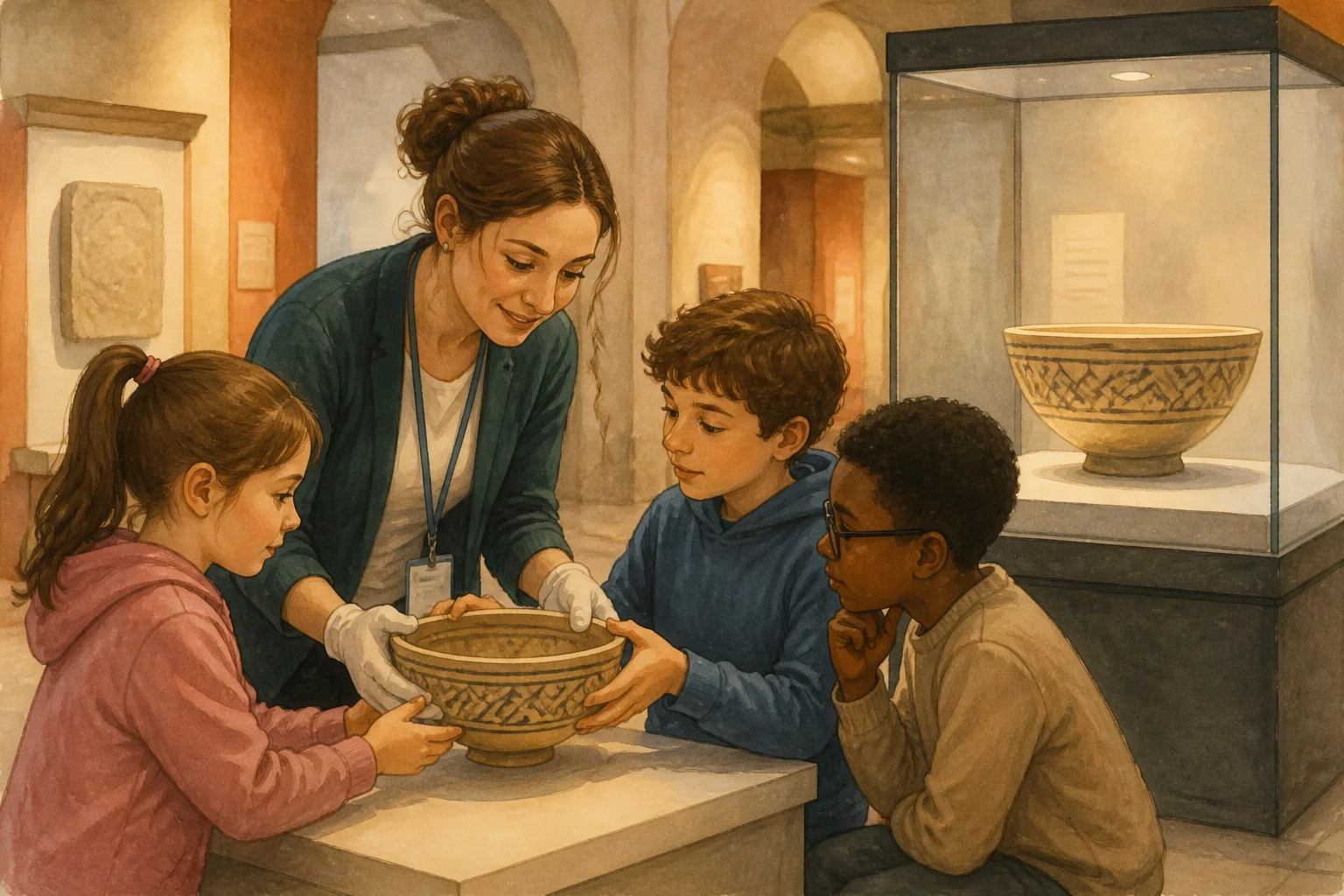
The museum commissioned a replica of a fragile bowl so that visitors could handle an object of the same weight and shape. The original remained in its glass case, protected from light and accidental damage. The replica travelled between classrooms in a padded box.
Miriam, the conservator, liked the arrangement. Children noticed details by touch that adults often missed behind the glass. She was less comfortable when a donor described the replica as a fake.
During a maintenance closure, both objects were placed on separate worktables. A colleague photographed the original for the catalogue but later realised that the wrong bowl appeared in the images. The error was corrected before publication; the replica had been properly marked underneath.
What unsettled Miriam was not the mistake but how little the donor noticed when she showed him the rejected photograph. He praised the object's unmistakable age and the patience of its anonymous maker.
She told him what he was looking at. He withdrew his praise immediately.
Miriam did not argue that the objects were interchangeable. The original had a history that the replica could not acquire by looking convincing. But the photograph had revealed something about the donor's response: he had spoken as though he could see that history directly.
For the next exhibition, she placed the replica beside a description of how it had been made. Visitors were invited to handle it before viewing the original. The sequence made resemblance useful without asking it to pass for ancestry.
Las palabras de los párrafos que lees se añaden a Vistas una vez por texto y día UTC. Es una estimación de exposición, no de comprensión.
Comprueba tu comprensión
Ficción original creada con ayuda de IA. Los niveles del MCER son orientativos.
Límite alcanzado
2,99 €/mes o 19,99 €/año, con facturación anual.
Inicia sesión para suscribirte
Crea una cuenta o inicia sesión para activar tus ventajas Premium.