Bu AI so‘rovini tekshirib bo‘lmadi. Qayta urinib ko‘ring.Yaratish uchun ushbu tekshiruvdan o‘ting.yashirishko‘rsatishYopishBu filtrlarga mos hujjatli film topilmadi.{0} daqBarchasiKomediyaHujjatliDramaFantastikaTaomlar va madaniyatTarixQo‘rqinchliTabiat va hayvonlarOdamlar va mehnatRomantikFan va tafakkurTrillerToifasizYo‘riqnomani yashirishBajarildiBu video bilan qanday o‘rganish mumkin?Mashq qilish uchun saqlangSo‘zni saqlash va keyin takrorlash uchun tarjimadagi + tugmasini bosing. Hisob kerak emas.So‘zingiz saqlandi. Qisqa testni bajaring va keyingi safar saqlangan so‘zlaringizni takrorlang.Birinchi mashg‘ulotni boshlash →Shu yerdan boshlangVideoni ko‘ring, subtitrdagi so‘zni tarjima qiling va keyin mashq qilish uchun saqlang. Hisobsiz ham tomosha qilishni boshlashingiz mumkin.Bitta qisqa video. Bitta foydali yangi so‘z.Birinchi o‘quv mashg‘ulotingizSo‘zni tarjima qilingVideoni yoqing, so‘ng tarjima qilish uchun inglizcha subtitrdagi so‘zni bosing. Ochilgan oynada tarjima tilini tanlang.30 soniya tomosha qilingNatijalaringiz ushbu brauzerga bog‘langan. Sayt ma’lumotlarini tozalash kirishni yo‘qotishga olib kelishi mumkin.{0} dan davom etishKo‘rishni davom ettirishTakrorlashga tayyor so‘zlar: {0}Keyingi mashg‘ulot yuklanmadi. Qayta urinib ko‘ring.Hozir filmni sinab ko‘ring. Hisobni keyin yaratishingiz mumkin.Keyingi hikoyangiz qidirilmoqda…Keyingi hikoyangizBu tanlovlarga mos yangi film yo‘q. Boshqa daraja yoki janrni sinab ko‘ring.Darajangiz va qiziqishingizga mos hikoyaSo‘zlarni yodda saqlangBepul hisob yaratishTo‘xtagan joyingizdan davom etingSaqlangan so‘zlarni takrorlashKo‘rgan hikoyalaringizdan saqlagan so‘zlarni takrorlang.Natijalaringizni saqlangTanlovlaringiz saqlanmadi. Qayta urinib ko‘ring.Tanlovlaringiz hisobingizga saqlandi.Bu filmni ko‘rishB2–C1 · YuqoriA1–A2 · Boshlang‘ichB1–B2 · O‘rtaFilmlar topilmadi. Boshqa filtr yoki tartibni sinab ko‘ring.Filmlarni yuklab bo‘lmadi. Qayta urinib ko‘ring.Yana filmlar yuklanmoqda…Rasm yo‘q{0} marta ko‘rilgan{0} — tomosha qilishDarajalar bo‘yicha so‘zlarYuklanmoqda…KeyingiPremium imkoniyatlarini faollashtirish uchun hisob yarating yoki kiring.Premium bilan yuqoriroq kunlik limitlarga ega bo‘ling.Chegaraga yetildiObuna bo‘lish uchun hisobga kiringObuna bo‘lishAvtomatik subtitrlarInglizchaTo‘liq ekrandan chiqishTo‘liq ekranBu video uchun tarjima qilingan subtitrlar mavjud emas.AvtomatikInglizcha matn ostida ko‘rsatish uchun tilni tanlang. O‘chirish uchun yana tanlang.O‘chirilganTanlangan til bu video uchun mavjud emas. Inglizcha subtitrlar yoqilgan holda qoladi.Subtitr tiliFree va Premium tariflarini solishtirish →Oyiga 2,99 € yoki yiliga bir marta to‘lanadigan 19,99 €.Har kuni so‘zlaringiz asosida {0} tagacha AI matni va hikoyalar uchun {1} tagacha rasm yarating.Premium bilan o‘rganishda davom etingKuniga ko‘proq tarjimadan foydalaning va o‘z so‘zlaringizdan ko‘proq AI matnlari hamda rasmlar yarating.OldingiNatijalaringizni boshqa qurilmalarda ham saqlash uchun bepul hisob yarating.Tekshirishdan oldin barcha so‘zlardan foydalaning.Mashqingizdagi savollar: {0} / {1} · Barcha darajalar.To‘g‘ri javob: {0}Boshqa film topishTekshirishDarajani tanlab, qisqa testni boshlang. Savollarni qayta ishlash doim bepul.Test tugallandiTo‘g‘ri!Bu darajada hali savollar yo‘q. Boshqa darajani sinab ko‘ring.Javobingiz saqlanmadi. Qayta urinib ko‘ring.Tavsiya etilgan daraja: {0}Birinchi urinish: {0} / {1}Subtitrni o‘qish (ishora)To‘liq to‘g‘ri emas. Qayta urinib ko‘ring.Test yuklanmadi.Test yuklanmoqda…Yetishmayotgan so‘zlarni yozing…Xatolarni ko‘rib chiqishYana {0} ta savol ishlashBu darajada yangi savollar yo‘q. Boshqa darajani tanlang yoki savollarni takrorlang.Mashqingizda bu darajaga mos savollar yo‘q. Takrorlash uchun Barcha darajalar’ni tanlang.Gap tuzish uchun so‘zlarni bosing.Savol {0} / {1} · To‘g‘ri: {2}Savol {0}Sahnani qayta ko‘rish · {0}Bu savolni qayta bajarishQayta urinishDaraja: {0}{0}-bosqichBosqich yakunlandiOxirgi javoblaringiz: {0} / {1} to‘g‘ri{0} ta savoldan iborat testni boshlashEng mos javobSahnani tushunishYetishmayotgan so‘zBo‘sh joyni to‘ldiringMa’noBir xil ma’noSo‘z tartibiYanaYana bu so‘zni bugun takrorlashga belgilaydi. Qayta takrorlash uchun so‘zlarni o‘rganish bo‘limini yana oching.Takrorlash tugadi! Yana deb baholangan so‘zlar hali ham bugun uchun belgilangan. Tayyor bo‘lsangiz, So‘zlarni o‘rganish bo‘limini oching.OsonBoshlash uchun subtitrdan so‘z saqlang yoki yuqorida o‘z so‘zingizni qo‘shing.QiyinSo‘zlaringizni yuklab bo‘lmadi. So‘zlarni o‘rganish tugmasini yana bosing.So‘zlaringiz tayyorlanmoqda…O‘rtachaKeyingi takrorlashHozir takrorlanadigan so‘zlar yo‘q. Keyinroq qayting yoki mashq qilish uchun yangi so‘z saqlang.Bahoni saqlab bo‘lmadi. Qayta urinib ko‘ring.So‘zlarni o‘rganishBugunSo‘zlar sonini yangilab bo‘lmadi. Mashg‘ulot xulosasini qayta oching.So‘zlarni saqlash va natijalarni kuzatish uchun bepul hisob yarating.Ko‘rilgan daqiqalar: {0}Bu filmning testi bilan mashq qilingLug‘atingiz saqlanmoqda…Ko‘rish mashg‘ulotingizLug‘atingizni ko‘rishYangi uchragan so‘zlar: {0}Yana mashq qilishBu brauzerda ovoz mavjud emas.Mavzular bo‘yicha so‘z to‘plamlarini ko‘ringJavobni tekshirishKundalik ingliz tili{0} ta so‘z va ibora · {1} ta mavzuBarakalla!Qaysi inglizcha so‘z mos keladi?Javobni ko‘rsatishInglizcha so‘zni kiritingBosqich tugadi!KartochkalarMa’nosini ko‘rsatishTopingNatija shu brauzerda saqlanadi. Uni boshqa qurilmalarda saqlash uchun kiring; sayt ma’lumotlarini tozalash kirish imkonini yo‘qotishi mumkin.Bitta harfni ochishHarfli ishora: {0}Kundalik ingliz tili uchun qisqa mashq. Mavzu tanlang va so‘zni eslashga harakat qiling.Bu so‘z to‘plamlarini mashq qilish uchun JavaScript funksiyasini yoqing.YuqoriBarcha darajalarBoshlang‘ichO‘rtaQiyinlikTavsiya etilgan mashq darajasi; ayrim so‘zlar va videolar osonroq yoki qiyinroq bo‘lishi mumkin.TinglashSo‘z to‘plamlari yuklanmadi. Qayta urinib ko‘ring.Mashq rejimiKeyingi so‘z →Keyingi bosqichKeyingi mavzu →Kartochka {0} / {1}So‘z mashqiMashq qilingan: {0} / {1}Bu mavzuda mashq qilingan turli so‘zlarNatija mashq qilingan turli so‘zlarni sanaydi. Ishoralar va ochilgan javoblar mashq hisoblanadi, yordamsiz eslash emas.Ma’nosini eslaysizmi?EslaymanBu mavzuni yana mashq qilishQayta urinishNimalarni eslashingizni tekshirish uchun keyinroq qayting. Mashq qilish hali mukammal o‘rganish degani emas.Javob va misolni o‘qing. Bu so‘zni takrorlash uchun saqlashingiz mumkin.Har bir bosqichdagi so‘zlarTakrorlash uchun saqlashSaqlab bo‘lmadi. Qayta urinib ko‘ring.Saqlandi ✓Inglizcha ma’nosi va misoli bilan Saqlangan so‘zlarga qo‘shildi.Bu safar {1} ta so‘zdan {0} tasi eslangan deb belgilandi.Bu safar {1} ta so‘zdan {0} tasi ishorasiz va qayta urinishsiz eslandi.So‘z to‘plamlariKundalik harakatlarHayvonlar va yovvoyi tabiatTabiat va atrof-muhitOila va odamlarHis-tuyg‘ular va xarakterOziq-ovqat va ichimliklarSalomatlik va tanaUy va kundalik hayotFikrlar va qarorlarKeng tarqalgan frazali fe’llarMunosabatlar va suhbatlarMaktab va ta’limFan va koinotXarid va pulYangiliklar va jamiyatFilmlar va hikoya qilishTexnologiya va internetSayohat va transportOb-havo va fasllarIsh va kasblarMavzu tanlangShu mavzuga oid video bilan o‘rganishni davom ettiring.Mashq qiling, keyin tomosha qilingTo‘g‘ri, ozgina yordam bilan. Keyinroq yana eslab ko‘ring.Hali to‘g‘ri emas. Qayta urinib ko‘ring, bitta harfni oching yoki javobni ko‘ring.Javob variantlari va izohlar bilan LearnMovies testi yozuviLearnMovies’da subtitr tarjimasi va so‘zni saqlash yozuviFilm haqidagi savollar orqali tushunganlaringizni tekshiring.So‘zni saqlash va keyin takrorlash uchun tarjimadagi + tugmasini bosing. Hisob kerak emas.Namoyishni to‘xtatishNamoyish animatsiyasini to‘xtatishMahsulot namoyishi to‘xtatilganNamoyishni davom ettirishNamoyish animatsiyasini ijro etishBoshlang‘ich so‘zlar · Inglizcha subtitrlarBarcha bosqichlarni ko‘rsatishNamoyishni pauza qilishNamoyishni boshlash{1} bosqichdan {0}-siTo‘g‘ri.Unchalik emas.{1} tadan {0} ta to‘g‘ri.Continue to Saved WordsThat word is already saved. Choose another word from the text for this tour.Check answerClose tourTour completeContinue to reviewO‘qishni davom ettirishBu sahna to‘xtatilgan. “worried” yoki subtitrdagi boshqa so‘z ustiga kursorni olib boring yoki bosing. So‘ralsa, tarjima tilini tanlang.Yo‘riqnomali namoyishni sinash1 · So‘zni sinab ko‘ringDoneRead, translate, save and review. Use word packs or AI texts whenever you want more practice with your words.You have a learning routineWelcome bonus earned: +50 XP, plus your review XP.Could not start the tour. Try again.Finish tourContinue on the practice pageTry a short guided reading exercise.Learn your first wordMaybe laterOpen Saved Words to try recalling its meaning. We will put your new word first in the review queue.Open Saved Words →Your word is savedOptional · AI practiceOptional · Quick questionGet a word pack with example sentences and a dialogue. A new pack uses your daily allowance; an existing pack can be opened again. You can skip this step.Read how the word is used in sentences and a dialogue. You can also open the exercises. Continue when you are ready to rate your recall.Explore the examplesSee your word in contextTry one question about the text. A correct first attempt earns +10 XP. You can skip it and still complete the tour.Try one questionRead the explanation, then continue to practise your saved word.Learn from the answerCheck what you understoodChoose Again, Hard, Medium or Easy honestly. The times show when you will review it again. Every rating earns the same review XP.How well did you remember?Read a few lines. Click a word you would like to learn; the highlighted word is a suggestion. Choose your translation language if asked.Read, then choose a wordResume tourWhat does this word mean? Think of the answer, then reveal the translation to check yourself.Try to remember firstComplete this saved-word review for a one-time +50 XP welcome bonus—enough to reach Level 2.Read the translation, then press Save to practise. It will keep the word and its sentence in Saved Words.Keep this wordShow me howSkip AI stepSkip questionSkip tourTake a quick tour3 · Practise1 · Read2 · Save1 · WatchPress Study words. Your saved word comes first.Start a real reviewWatch a short scene, then hover over or tap an English subtitle word to translate it. If no words appear, use the subtitle menu to turn on English. Choose your translation language if asked.Try a subtitle wordChoose your words, level, topic and format, then press Generate my text. This uses your daily text allowance. A selected picture also uses your picture allowance. Nothing is generated until you press the button.You have completed a real word review. Now you can create an AI text from your saved words, or finish the tour here.Create something with your wordsMake a text you want to readWatch, translate, save and review. Use word packs or AI texts whenever you want more practice with your words.Read the translation, then press the + button in the popup. This saves the word and its subtitle sentence for practice.Press Watch now, or choose an episode. If the player is already open, press its play button. You stay on this video throughout the first steps.Start a videoVideo tomosha qilishTarjima so‘rovini tekshirib bo‘lmadi. Qayta urinib ko‘ring.Tarjima olish uchun ushbu tekshiruvni yakunlang.Hozir emasTilni tanlangBu til so‘z tarjimalari va mavjud bo‘lsa, avtomatik ikkinchi subtitrlar uchun ishlatiladi.Tarjima tiliBuni keyinroq o‘zgartirishingiz mumkin. Sayt tili o‘zgarmaydi.Tanlovni saqlashTarjimalar qaysi tilda bo‘lishini xohlaysiz?Sayt tiliBu darajada hali so‘zlar yo‘q. Video ko‘ring yoki kutubxonadan matn o‘qing.Uchrashlar: {0} · Filmlar / qismlar: {1}Lug‘atni saqlab yoki yuklab bo‘lmadi. Qayta urinib ko‘ring.Taxminiy {0}Qo‘llanishiga qarab taklif qilingan daraja; bu so‘z uchun CEFR manbasida alohida tasdiqlanmagan.Tez-tez uchraganTarjimani yashirishBu so‘zni bilamanBu so‘zni bilaman: {0}{0}: ro‘yxatdagi {4} so‘zdan {1} ko‘rilgan, {2} tez-tez uchragan, {3} yodda. So‘zlarni ko‘rish.{0} · {1} / {2}-sahifa yuklandi.Uchrashlar yuklanmoqda…Tarjima yuklanmoqda…So‘zlar yuklanmoqda…{0} yodda deb belgilandi.Yana uchrashlarni yuklashUchrashlar topilmadi.Saqlangan so‘zlarni ochish →{0}-sahifaParagraf {0} · {1}Talaffuzni tinglash{2} so‘zdan {0}–{1} · {3} / {4}-sahifa{1} matnining {2}-paragrafida {0} so‘zini o‘qishYoddaUchrashlarni qayta yuklashTarjimani qayta urinishBu so‘zni saqlab bo‘lmadi. Qayta urinib ko‘ring.Mashq uchun saqlashNatijalar saqlandi.Mashq uchun saqlandiTillarni qidirishTilni tanlashSeans tugadi. Lug‘atingizni ko‘rish uchun yana kiring.Tarjimani ko‘rsatishUchratishlar: {0} · Video / matn: {1}So‘z o‘rganish keyingi video yoki matningizdan boshlanadi.{0} so‘zining tarjimasini ko‘rsatishTarjimani yuklab bo‘lmadi. Qayta urinib ko‘ring.Kunlik tarjima limitiga yetdingiz. Ertaga qayta urinib ko‘ring.Bugun {1} ta tarjimadan {0} tasi qoldiBekor qilish{0} so‘zining yodda belgisini olib tashlash{0} uchun yodda belgisi olib tashlandi.{0} so‘zini {1} filmida {2} vaqtida ko‘rishSo‘zlaringizSo‘z qo‘shishInglizcha so‘z kiriting. Uni tanlagan tilingizga tarjima qilamiz; tarjimani tahrirlashingiz mumkin.O‘zgartirishInglizcha so‘z, uning tarjimasi yoki ma’nosini va xohlasangiz misol gapni kiriting.Tarjima tiliMisol gap (ixtiyoriy)Tarjima yoki ma’noInglizcha so‘zBarcha avatarlar ochildi!RejissyorQuvnoq popkornKichik donKinosevarKitobsevarBirinchi ochilishAvataringizni tanlangKunlik bonus +15Kunlik bonus olindi · +15 XPAvatarni tanlashYopish{0}/5 mashq · kunlik bonus +15 XP+{0} XPNatijani yangilab bo‘lmadi. Qayta urinib ko‘ring.Hamma uchun bepul. Premium XP miqdorini oshirmaydi.{0}-darajaSiz {0}-darajaga yetdingiz!{0}-darajada ochiladiFaollik darajalari mashq qilishingizni aks ettiradi. Ular A1–C2 ingliz tili darajangizdan alohida.Keyingi avatar: {0} · {1}-darajaXP beradigan keyingi takrorlash: {0}Keyingi faollik darajasiga o‘sish{1}-darajagacha {0} XPHar bir savol faqat bir marta XP beradi. So‘zlarni takrorlash vaqti kelganda yana XP olasiz; shu kundagi takroriy mashqlar qo‘shimcha ball bermaydi. So‘z qo‘shish, bilaman deb belgilash va AI kontent yaratish XP bermaydi.Kuniga beshta turli mashqni bajaring: +15 XP. Yangi kun UTC bo‘yicha yarim tunda boshlanadi.So‘zni to‘g‘ri topish: +10 XP yoki harf yordami bilan +5 XP.Video yoki hikoya savoliga birinchi urinishda to‘g‘ri javob: +10 XP.Vaqti kelgan kartani takrorlash: har qanday baho, jumladan Yana uchun +3 XP. Halol baholang.XP qanday olinadi?TanlanganPopkorn sayohatingizJami {0} XPQayta o‘qishMuvozanatli · 95%Matn yoki fikr-mulohaza yaratilmoqda. Kuting.Qiyinroq · 90%Fikr-mulohaza olishSo‘zlarim bilan hikoya yaratishO‘z mavzumO‘z nisbatimO‘chirishBu matn va o‘qish tarixi o‘chirilsinmi? Kunlik yaratish limitingiz tiklanmaydi.Matn o‘chirildi.DialogJuda osonBirinchi hikoyangiz shu yerda paydo bo‘ladi.So‘rov bajarilmadi. Ulanish va sozlamalarni tekshirib, qayta urinib ko‘ring.Eslab qolingan so‘zlar va maqsadli darajangiz lug‘ati asosida taxmin qilinadi. So‘zni ko‘rish uni bilish degani emas. Yakuniy nisbat farq qilishi mumkin.Kundalik hayotTanish so‘zlarning taxminiy ulushiJavobingiz keyingi matndagi tanish so‘zlar ulushini o‘zgartiradi.Saqlandi. Keyingi matn yangilangan lug‘at sozlamalaridan foydalanadi.ShaklMatnimni yaratishMatn yoki fikr-mulohaza yaratilmoqda…Yaratish amalga oshmadi. Muvaffaqiyatli yaratish limitingiz sarflanmadi. Qayta urinib ko‘ring.Juda qiyinBu matn qanday edi?Rasm qo‘shishBugun qolgan rasmlar soni: {0} / {1}. Matningiz avval tayyor bo‘ladi.{0} uchun rasmSun’iy intellekt yaratgan rasm · hikoyangiz bilan saqlandiRasmni tekshirishRasm yaratilmadi. Hikoyangiz saqlandi va o‘qishga tayyor.Bugun boshqa rasm yaratib bo‘lmaydi. Matnlarni o‘qish va yaratishda davom etishingiz mumkin.Saqlangan rasm yuklanmadi. Qayta urinib ko‘ring.Rasmingiz yaratilmoqda… Kutayotganingizda o‘qishingiz va so‘zlarni tarjima qilishingiz mumkin.Rasmni yaratishni qayta sinashRasmlar vaqtincha mavjud emas. Siz hali ham matn yaratishingiz mumkin.Rasm qo‘shishVideolaringizdagi so‘zlardan o‘z hikoyangizni yarating.UzunlikMaqsadli darajaSaqlangan matnlarKunlik yaratish limitiga yetdingiz. Saqlangan matnlarni qayta o‘qishingiz mumkin.Uzun · taxminan 400 so‘zBir vaqtning o‘zida bitta inglizcha so‘z qo‘shing. Yuqoridagi tanlangan so‘zlarni ham tahrirlashingiz mumkin.48 tagacha harfdan iborat bitta inglizcha so‘z kiriting. Apostrof va chiziqcha ishlatish mumkin.Bu bo‘limni o‘qidimO‘rta · taxminan 200 so‘zAsosan tanish · 98%TabiatKeyingiBu matn mavjud emas yoki o‘chirilgan.Qo‘shimcha sozlamalarBoshqa tavsiyalarSo‘zni ishlatib ko‘ringBugun {0} ta gap tekshiruvi mavjudMashq so‘zlaringizOldingiShaxsiy kutubxonangizga saqlanadi. AI yaratgan badiiy matn; daraja va tanish so‘zlar ulushi taxminiy.{1} ta bo‘limdan {0} tasi o‘qildiBugun {1} ta matndan {0} tasi mavjudAvval shu so‘z bor bo‘limni o‘qing va belgilang.VideolarimdanMosShaxsiy kutubxonangizga saqlandi.Mashq qilish uchun saqlangan so‘zlar hali yo‘q. Saqlangan so‘zlar bo‘limida qo‘shing yoki yuqorida kiriting.Saqlangan so‘zlar bo‘limida yaxshi bilaman deb belgilanganlaridan tashqari barcha darajadagi saqlangan so‘zlar ko‘rsatiladi. Tanlangan daraja matnning murakkabligini belgilaydi.FanBo‘lim o‘qildiO‘z gapingizni yozingSeansingiz tugadi. Qayta kiring.Qisqa · taxminan 100 so‘zO‘qishlaringizdanMashq uchun saqlanganVideo yoki o‘qishda uchraganBu daraja uchun taklif{0} ta saqlangan matn · {1} ta tugallangan · o‘qishda uchragan {2} ta so‘zHikoyaDaraja {0} · {1} ta so‘z · tanish so‘zlar taxminan {2}% (so‘ralgan {3}%)O‘qishlarimMavzu{0} so‘zini tarjima qilishTarjima qilish yoki saqlash uchun so‘zni tanlang. Natijani saqlash uchun o‘qilgan har bir bo‘limni belgilang.SayohatDaraja ko‘rsatilmagan{0} tanlangan so‘zlaringizga qo‘shildi.Vergul bilan ajratilgan 8 tagacha inglizcha so‘z tanlang. Har bir yozuv bitta so‘z bo‘lishi kerak.Takliflarni tanlang yoki almashtiring. Saqlangan so‘zlar birinchi keladi; videodagi so‘zlar sizga tanish bo‘lishi mumkin.Mashq uchun so‘zlar · vergul bilan ajratilgan 8 tagacha
So‘zni tarjima qilish va mashq uchun saqlash uchun ustiga bosing.
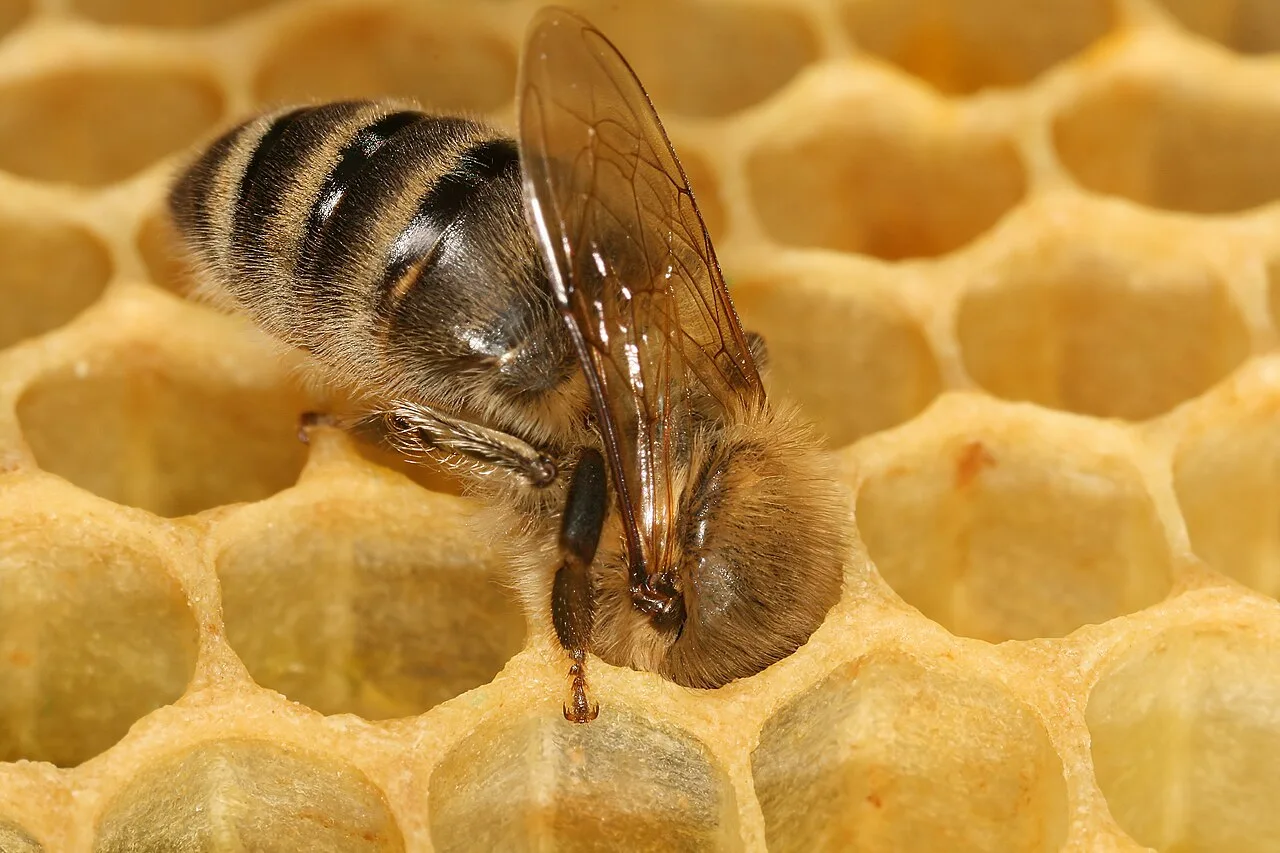
How can a bee give directions without speaking? After finding food, a honeybee returns to its hive and can perform a waggle dance. Its movements tell other bees where to go.
Inside the hive, the bee moves forward while shaking its body from side to side. This straight part of the dance is called the waggle run. The bee then circles back and repeats the movement, returning on the other side.
The angle of the waggle run shows the direction of the food compared with the position of the Sun. On the vertical honeycomb, a run straight upwards means the food is towards the Sun. The longer each waggle run lasts, the farther away the food is.
A dance with two messages
Waggle runShake, move forward, circle back.
Dance path inside the hive
Direction
The angle shows which way to fly, using the Sun as a guide.
Straight up on the comb → towards the Sun outside.
Distance
The time spent on each waggle run shows how far to fly.
More time waggling → a longer journey.
The orange line shows the waggle run. The grey loops bring the bee back to the start. This simplified example shows a dance on a vertical honeycomb.
Researchers at the University of Sussex study these dances using video recordings. By measuring the angle and timing each waggle run, they can work out where the bees have found food. The dances help them understand the landscape around the hive.
In one study, bees travelled farther in summer than in spring or autumn. This suggested that suitable food was harder to find in summer in the area studied. However, bees in other places may face different conditions. The same seasonal pattern does not necessarily apply everywhere.
O‘qishga vaqt ajratgan paragraflaringizdagi so‘zlar har bir matn uchun UTC kunida bir marta Ko‘rilganlarga qo‘shiladi. Bu tushunish emas, uchratish taxmini.
Manbalar va surat
Quyidagi manbalar asosida ingliz tili o‘rganuvchilari uchun yozilgan.