Não foi possível verificar esta solicitação de IA. Tente novamente.Conclua esta verificação para gerar.ocultarmostrarFecharNenhum documentário corresponde a esses filtros.{0} minTodosComédiaDocumentárioDramaFantasiaComida e culturaHistóriaTerrorNatureza e animaisPessoas e trabalhoRomanceCiência e menteSuspenseSem categoriaOcultar guiaConcluídoComo aprender com este vídeoSalve para praticarToque em + na tradução para salvar uma palavra e revisá-la depois. Não precisa de conta.Sua palavra foi salva. Faça um quiz curto e revise suas palavras salvas na próxima visita.Começar minha primeira sessão →Comece aquiAssista, traduza uma palavra da legenda e salve para praticar depois. Você pode começar sem uma conta.Um vídeo curto. Uma palavra nova e útil.Sua primeira sessão de aprendizagemTraduza uma palavraDê play e clique ou toque em uma palavra da legenda em inglês para traduzi-la. Escolha o idioma de tradução na janela.Assista a 30 segundosSeu progresso está vinculado a este navegador. Limpar os dados do site pode remover o acesso.Continuar em {0}Continuar assistindoPalavras prontas para revisar: {0}Não foi possível carregar sua próxima sessão. Tente novamente.Experimente um filme agora. Você pode criar uma conta depois.Buscando sua próxima história…Sua próxima históriaNenhum filme novo corresponde a essas opções. Tente outro nível ou gênero.Uma história para seu nível e seus interessesMantenha suas palavras na memóriaCriar uma conta gratuitaRetome de onde parouRevisar palavras salvasReveja as palavras que salvou das histórias que assistiu.Salve seu progressoNão foi possível salvar suas preferências. Tente novamente.Suas preferências estão salvas na sua conta.Assistir a este filmeB2–C1 · AvançadoA1–A2 · InicianteB1–B2 · IntermediárioNenhum filme encontrado. Experimente outro filtro ou ordenação.Não foi possível carregar os filmes. Tente novamente.Carregando mais filmes…Sem imagem{0} visualizaçõesAssistir a {0}Palavras por nívelCarregando…PróximaCrie uma conta ou entre para ativar seus benefícios Premium.Tenha limites diários maiores com Premium.Limite atingidoEntre na sua conta para assinarAssinarLegendas automáticasInglêsSair da tela cheiaTela cheiaNão há legendas traduzidas disponíveis para este vídeo.AutomáticoEscolha um idioma para exibi-lo abaixo do inglês. Escolha novamente para desativá-lo.DesativadoO idioma selecionado não está disponível para este vídeo. As legendas em inglês continuam ativadas.Idioma das legendasComparar Free e Premium →€ 2,99/mês ou € 19,99/ano, com cobrança anual.Crie até {0} textos com IA usando suas palavras e {1} imagens para histórias por dia.Continue aprendendo com PremiumTenha mais traduções por dia e crie mais textos e imagens com IA a partir das suas palavras.AnteriorCrie uma conta gratuita para manter seu progresso em outros dispositivos.Use todas as palavras antes de verificar.Perguntas na sua prática: {0} / {1} · Todos os níveis.Resposta correta: {0}Encontrar outro filmeVerificarEscolha um nível e comece um quiz curto. Tentar responder novamente é sempre grátis.Quiz concluídoCorreto!Ainda não há perguntas neste nível. Tente outro nível.Não foi possível salvar sua resposta. Tente novamente.Nível sugerido: {0}Primeira tentativa: {0} / {1}Ler legenda (dica)Ainda não. Tente novamente.Não foi possível carregar o quiz.Carregando quiz…Digite as palavras que faltam…Revisar errosPraticar mais {0}Não há perguntas novas neste nível. Tente outro nível ou revise suas perguntas.Não há perguntas deste nível na sua prática. Escolha Todos os níveis para revisá-las.Clique nas palavras para montar a frase.Pergunta {0} / {1} · Corretas: {2}Pergunta {0}Rever cena · {0}Tentar esta pergunta novamenteTentar novamenteNível: {0}Rodada {0}Rodada concluídaSuas últimas respostas: {0} / {1} corretasIniciar quiz de {0} perguntasMelhor respostaCompreensão da cenaPalavra que faltaPreencha a lacunaSignificadoMesmo significadoOrdem das palavrasDe novoDe novo agenda esta palavra para hoje. Abra Estudar palavras novamente para revisá-la.Revisão concluída! As palavras marcadas como De novo continuam para hoje. Abra Estudar palavras quando quiser continuar.FácilSalve uma palavra de uma legenda ou adicione uma acima para começar a praticar.DifícilNão foi possível carregar suas palavras. Tente Estudar palavras novamente.Preparando suas palavras…MédioPróxima revisãoNão há palavras para revisar agora. Volte mais tarde ou salve uma palavra nova para praticar.Não foi possível salvar sua avaliação. Tente novamente.Estudar palavrasHojeNão foi possível atualizar o total de palavras. Abra o resumo da sessão novamente.Crie uma conta gratuita para salvar palavras e acompanhar seu progresso.Minutos assistidos: {0}Pratique com o quiz deste filmeSalvando seu vocabulário…Sua sessão de vídeoVer seu vocabulárioNovas palavras encontradas: {0}Praticar novamenteO áudio não está disponível neste navegador.Explore conjuntos de vocabulário por temaVerificar respostaInglês do dia a dia{0} palavras e expressões · {1} temasMuito bem!Qual palavra em inglês se encaixa?Mostrar respostaDigite a palavra em inglêsRodada concluída!CartõesMostrar significadoAdivinharO progresso fica salvo neste navegador. Entre para mantê-lo entre dispositivos; limpar os dados do site pode remover o acesso.Revelar uma letraDica de letras: {0}Um pouco de prática de inglês do dia a dia. Escolha um tema e tente lembrar a palavra.Ative o JavaScript para praticar estes conjuntos de vocabulário.AvançadoTodos os níveisInicianteIntermediárioDificuldadeDificuldade sugerida; algumas palavras e vídeos podem ser mais fáceis ou difíceis.OuvirNão foi possível carregar os conjuntos. Tente novamente.Modo de práticaPróxima palavra →Próxima rodadaPróximo tema →Cartão {0} de {1}Prática de palavras{0} / {1} praticadasPalavras diferentes praticadas neste temaO progresso conta palavras diferentes praticadas. Dicas e respostas reveladas contam como prática, não como lembrança sem ajuda.Você lembra o significado?Eu lembroPraticar este tema novamenteTentar novamenteVolte depois para verificar o que lembra. Praticar não significa dominar.Leia a resposta e o exemplo. Você pode salvar esta palavra para revisar.Palavras por rodadaSalvar para praticarNão foi possível salvar. Tente novamente.Salva ✓Adicionada às palavras salvas com seu significado em inglês e um exemplo.{0} de {1} palavras marcadas como lembradas nesta rodada.{0} de {1} palavras lembradas sem dicas ou novas tentativas nesta rodada.Conjuntos de vocabulárioAções do dia a diaAnimais e vida selvagemNatureza e meio ambienteFamília e pessoasSentimentos e personalidadeComida e bebidasSaúde e corpoCasa e cotidianoOpiniões e decisõesPhrasal verbs comunsRelacionamentos e conversasEscola e aprendizagemCiência e espaçoCompras e dinheiroNotícias e sociedadeFilmes e narrativasTecnologia e internetViagens e transporteClima e estaçõesTrabalho e profissõesEscolha um temaContinue aprendendo com um vídeo relacionado a este tema.Pratique e depois assistaCorreto, com uma ajudinha. Tente lembrar novamente mais tarde.Ainda não. Tente novamente, revele uma letra ou mostre a resposta.Gravação de um quiz do LearnMovies com alternativas e feedbackGravação da tradução de legendas e de como salvar uma palavra no LearnMoviesConfira o que você entendeu com perguntas sobre o filme.Toque em + na tradução para salvar uma palavra e revisá-la depois. Não precisa de conta.Pausar demonstraçãoPausar a animação de demonstraçãoDemonstração pausadaReproduzir demonstraçãoReproduzir a animação de demonstraçãoVocabulário básico · Legendas em inglêsMostrar todos os passosPausar demonstraçãoReproduzir demonstraçãoPasso {0} de {1}Correto.Não exatamente.{0} de {1} respostas corretas.Continue to Saved WordsThat word is already saved. Choose another word from the text for this tour.Check answerClose tourTour completeContinue to reviewContinuar lendoEsta cena está pausada. Passe o cursor ou toque em “worried” ou em outra palavra da legenda. Escolha o idioma de tradução se solicitado.Experimentar a demonstração guiada1 · Experimente uma palavraDoneRead, translate, save and review. Use word packs or AI texts whenever you want more practice with your words.You have a learning routineWelcome bonus earned: +50 XP, plus your review XP.Could not start the tour. Try again.Finish tourContinue on the practice pageTry a short guided reading exercise.Learn your first wordMaybe laterOpen Saved Words to try recalling its meaning. We will put your new word first in the review queue.Open Saved Words →Your word is savedOptional · AI practiceOptional · Quick questionGet a word pack with example sentences and a dialogue. A new pack uses your daily allowance; an existing pack can be opened again. You can skip this step.Read how the word is used in sentences and a dialogue. You can also open the exercises. Continue when you are ready to rate your recall.Explore the examplesSee your word in contextTry one question about the text. A correct first attempt earns +10 XP. You can skip it and still complete the tour.Try one questionRead the explanation, then continue to practise your saved word.Learn from the answerCheck what you understoodChoose Again, Hard, Medium or Easy honestly. The times show when you will review it again. Every rating earns the same review XP.How well did you remember?Read a few lines. Click a word you would like to learn; the highlighted word is a suggestion. Choose your translation language if asked.Read, then choose a wordResume tourWhat does this word mean? Think of the answer, then reveal the translation to check yourself.Try to remember firstComplete this saved-word review for a one-time +50 XP welcome bonus—enough to reach Level 2.Read the translation, then press Save to practise. It will keep the word and its sentence in Saved Words.Keep this wordShow me howSkip AI stepSkip questionSkip tourTake a quick tour3 · Practise1 · Read2 · Save1 · WatchPress Study words. Your saved word comes first.Start a real reviewWatch a short scene, then hover over or tap an English subtitle word to translate it. If no words appear, use the subtitle menu to turn on English. Choose your translation language if asked.Try a subtitle wordChoose your words, level, topic and format, then press Generate my text. This uses your daily text allowance. A selected picture also uses your picture allowance. Nothing is generated until you press the button.You have completed a real word review. Now you can create an AI text from your saved words, or finish the tour here.Create something with your wordsMake a text you want to readWatch, translate, save and review. Use word packs or AI texts whenever you want more practice with your words.Read the translation, then press the + button in the popup. This saves the word and its subtitle sentence for practice.Press Watch now, or choose an episode. If the player is already open, press its play button. You stay on this video throughout the first steps.Start a videoAssistir a um vídeoNão foi possível verificar a solicitação de tradução. Tente novamente.Conclua esta verificação para traduzir.Agora nãoEscolha um idiomaUse este idioma para traduzir palavras e para a segunda legenda automática, quando disponível.Idioma de traduçãoVocê pode mudar depois. O idioma do site continuará o mesmo.Salvar preferênciaEm qual idioma você quer as traduções?Idioma do siteAinda não há palavras neste nível. Assista a um vídeo ou leia um texto da biblioteca.Ocorrências: {0} · Filmes / episódios: {1}Não foi possível salvar ou carregar seu vocabulário. Tente novamente.{0} estimadoNível sugerido com base no uso; não verificado individualmente em uma referência do QECR.Encontradas com frequênciaOcultar traduçãoEu conheço esta palavraEu conheço esta palavra: {0}{0}: {1} vistas, {2} frequentes e {3} lembradas de {4} palavras na lista. Ver palavras.{0} · Página {1} de {2} carregada.Carregando ocorrências…Carregando tradução…Carregando palavras…{0} marcada como lembrada.Carregar mais ocorrênciasNenhuma ocorrência disponível.Abrir palavras salvas →Página {0}Parágrafo {0} · {1}Ouvir pronúncia{0}–{1} de {2} palavras · Página {3} de {4}Ler {0} em {1}, parágrafo {2}LembradasTentar carregar as ocorrências novamenteTentar traduzir novamenteNão foi possível salvar esta palavra. Tente novamente.Salvar para praticarProgresso salvo.Salva para praticarBuscar idiomasSelecionar idiomaSua sessão expirou. Entre novamente para ver seu vocabulário.Mostrar traduçãoEncontros: {0} · Vídeos / textos: {1}Seu vocabulário começa com o próximo vídeo ou texto.Mostrar tradução de {0}Não foi possível carregar a tradução. Tente novamente.Você atingiu o limite diário de traduções. Tente amanhã.Restam {0} de {1} traduções hojeDesfazerRemover a marca de lembrada de {0}{0} não está mais marcada como lembrada.Ver {0} em {1} no tempo {2}Suas palavrasAdicionar palavraDigite uma palavra em inglês. Vamos traduzi-la para o idioma escolhido; você pode editar a tradução.AlterarAdicione uma palavra em inglês, sua tradução ou significado e, se quiser, uma frase de exemplo.Idioma da traduçãoFrase de exemplo (opcional)Tradução ou significadoPalavra em inglêsTodos os avatares desbloqueados!DiretorPipoca felizGrãozinhoCinéfiloLeitorPrimeiro estouroEscolha seu avatarBônus diário +15Bônus diário conquistado · +15 XPEscolher avatarFechar{0}/5 atividades · +15 XP de bônus diário+{0} XPNão foi possível atualizar seu progresso. Tente novamente.Grátis para todos. Premium não aumenta o XP.Nível {0}Você chegou ao nível {0}!Desbloqueia no nível {0}Os níveis de atividade celebram sua prática. Eles são separados do seu nível de inglês A1–C2.Próximo avatar: {0} · Nível {1}Próxima revisão com XP: {0}Progresso até o próximo nível de atividade{0} XP até o nível {1}Cada pergunta dá XP apenas uma vez. As palavras voltam a dar XP quando a revisão vence; repetir no mesmo dia não dá mais pontos. Adicionar palavras, marcá-las como conhecidas ou gerar conteúdo com IA não dá XP.Complete cinco atividades diferentes por dia: +15 XP. O dia reinicia à meia-noite UTC.Resposta correta em Adivinhar: +10 XP, ou +5 com dica de letra.Resposta correta a uma pergunta de vídeo ou história na primeira tentativa: +10 XP.Revisão agendada de cartão: +3 XP para qualquer avaliação, incluindo De novo. Avalie com sinceridade.Como ganhar XPSelecionadoSua jornada de pipoca{0} XP no totalLer novamenteEquilibrado · 95%Um texto ou feedback está sendo gerado. Aguarde.Desafiador · 90%Receber feedbackCriar uma história com minhas palavrasMeu próprio temaProporção personalizadaExcluirExcluir este texto e seu histórico de leitura? Sua cota diária de geração não será restaurada.Texto excluído.DiálogoFácil demaisSua primeira história aparecerá aqui.Não foi possível concluir a solicitação. Verifique a conexão e as configurações e tente novamente.Estimativa baseada em palavras lembradas e no vocabulário do seu nível. Ter visto uma palavra não significa conhecê-la. A proporção final pode variar.Vida cotidianaVocabulário familiar estimadoSua resposta ajusta a familiaridade do vocabulário do próximo texto.Salvo. O próximo texto usará a nova configuração de vocabulário.FormatoGerar meu textoCriando seu texto ou feedback…A geração falhou. Sua cota de gerações bem-sucedidas não foi usada. Tente gerar novamente.Difícil demaisComo foi este texto?Adicionar uma imagemImagens disponíveis hoje: {0} de {1}. O texto fica pronto primeiro.Ilustração de {0}Ilustração gerada por IA · salva com sua históriaVerificar imagemNão foi possível criar a imagem. Sua história está salva e pronta para ler.Não há mais imagens disponíveis hoje. Você pode continuar lendo e criando textos.Não foi possível carregar a imagem salva. Tente novamente.Criando sua imagem… Você pode ler e traduzir palavras enquanto espera.Tentar criar a imagem novamenteAs imagens estão temporariamente indisponíveis. Você ainda pode criar um texto.Incluir uma imagemTransforme palavras dos seus vídeos em uma história sua.TamanhoNível desejadoTextos salvosVocê atingiu o limite diário de geração. Ainda pode reler os textos salvos.Longo · cerca de 400 palavrasAdicione uma palavra em inglês por vez. Você também pode editar as palavras selecionadas acima.Digite uma palavra em inglês com até 48 letras. Apóstrofos e hífens são permitidos.Li esta seçãoMédio · cerca de 200 palavrasQuase todo familiar · 98%NaturezaPróximoEste texto não está disponível ou foi excluído.Mais opçõesMais sugestõesTente usar uma palavra{0} verificações de frases disponíveis hojeSuas palavras de práticaAnteriorSalvo na sua biblioteca privada. Ficção gerada por IA; o nível e a familiaridade do vocabulário são estimativas.{0} de {1} seções lidas{0} de {1} textos disponíveis hojePrimeiro leia e marque a seção que contém esta palavra.Dos meus vídeosNa medida certaSalvo na sua biblioteca privada.Ainda não há palavras salvas para praticar. Adicione em Palavras salvas ou escreva acima.Mostramos palavras salvas de todos os níveis, exceto as marcadas como bem conhecidas em Palavras salvas. O nível escolhido define a dificuldade do texto.CiênciaSeção lidaEscreva sua própria fraseSua sessão expirou. Entre novamente.Curto · cerca de 100 palavrasDas suas leiturasSalva para praticarVistas em vídeos ou leiturasSugerida para este nível{0} textos salvos · {1} concluídos · {2} palavras encontradas na leituraHistóriaNível {0} · {1} palavras · vocabulário familiar estimado {2}% (solicitado {3}%)Minhas leiturasTemaTraduzir {0}Selecione uma palavra para traduzir ou salvar. Marque cada seção após a leitura para guardar seu progresso.ViagensNível não informado{0} foi adicionada às palavras selecionadas.Escolha até 8 palavras em inglês, separadas por vírgulas. Cada entrada deve conter uma palavra.Escolha sugestões ou substitua-as. Palavras salvas vêm primeiro; palavras vistas nos vídeos podem já ser familiares.Palavras para praticar · até 8, separadas por vírgulas
Toque em uma palavra para traduzi-la e salvá-la para praticar.
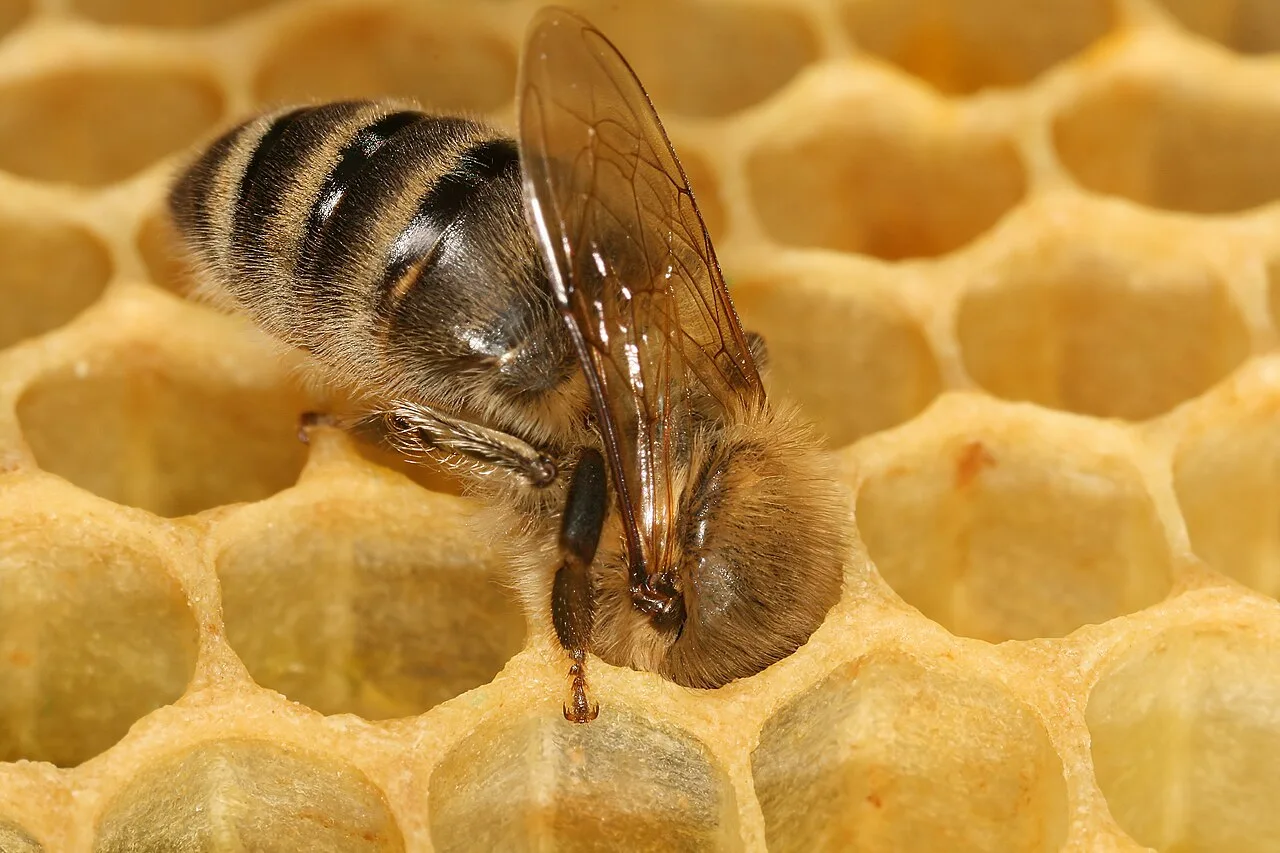
How can a bee give directions without speaking? After finding food, a honeybee returns to its hive and can perform a waggle dance. Its movements tell other bees where to go.
Inside the hive, the bee moves forward while shaking its body from side to side. This straight part of the dance is called the waggle run. The bee then circles back and repeats the movement, returning on the other side.
The angle of the waggle run shows the direction of the food compared with the position of the Sun. On the vertical honeycomb, a run straight upwards means the food is towards the Sun. The longer each waggle run lasts, the farther away the food is.
A dance with two messages
Waggle runShake, move forward, circle back.
Dance path inside the hive
Direction
The angle shows which way to fly, using the Sun as a guide.
Straight up on the comb → towards the Sun outside.
Distance
The time spent on each waggle run shows how far to fly.
More time waggling → a longer journey.
The orange line shows the waggle run. The grey loops bring the bee back to the start. This simplified example shows a dance on a vertical honeycomb.
Researchers at the University of Sussex study these dances using video recordings. By measuring the angle and timing each waggle run, they can work out where the bees have found food. The dances help them understand the landscape around the hive.
In one study, bees travelled farther in summer than in spring or autumn. This suggested that suitable food was harder to find in summer in the area studied. However, bees in other places may face different conditions. The same seasonal pattern does not necessarily apply everywhere.
As palavras dos parágrafos que você lê entram em Vistas uma vez por texto por dia UTC. Isso estima contato, não compreensão.
Fontes e foto
Texto para estudantes de inglês com base nas fontes abaixo.