
The Exhibition of Nearly
Chạm vào một từ để dịch và lưu lại luyện tập.
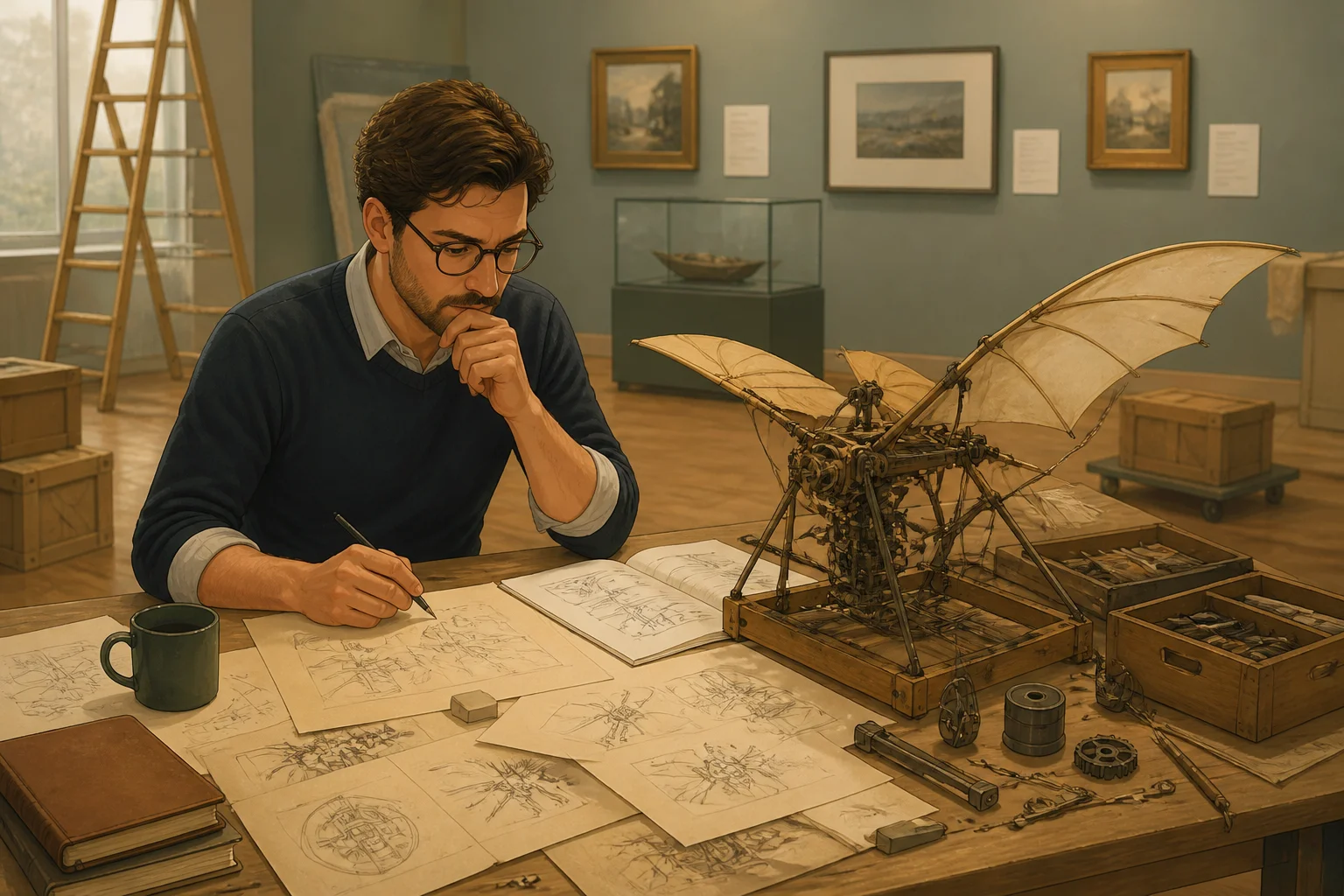
The exhibition was conceived as a defence of unfinished things: sketches abandoned before they became paintings, inventions defeated by a missing component, novels whose final chapters existed only in the assurances of their authors. Its curator, Rowan, wanted to release failure from the obligation to become an inspiring anecdote.
The funding committee loved the idea, particularly its potential to demonstrate that setbacks were stepping stones to success. Rowan attempted a distinction. Some projects, he said, did not lead anywhere. That was part of their interest.
The committee agreed enthusiastically and asked him to make the visitor's journey more hopeful.
He began selecting objects. A half-built instrument belonged to a musician who had simply lost interest; an unfinished portrait had outlived the friendship that prompted it. Rowan wrote labels preserving these unresolved circumstances, then found himself arranging the objects into a sequence that ended with a celebrated invention.
The sequence was satisfying. It was also precisely the argument he had intended not to make.
He removed the invention and left the final space empty. The designer mistook this for a delivery problem. The committee suggested a mirror so that visitors could imagine their own future achievements. Rowan spent an afternoon considering how to prevent an empty space from becoming an uplifting instruction.
Eventually he placed an ordinary bench there, with no explanatory text. On opening day, visitors sat down to rest. Some checked their phones; one returned to look again at the abandoned portrait.
A reviewer called the ending an eloquent statement about possibility. Rowan was briefly irritated, then almost grateful. He had wanted to free the objects from compulsory conclusions. He could hardly insist that visitors arrive at his preferred refusal of one.
Từ trong đoạn bạn dành thời gian đọc được thêm vào Đã gặp, một lần mỗi văn bản mỗi ngày UTC. Đây là ước tính tiếp xúc, không phải mức độ hiểu.
Kiểm tra đọc hiểu
Truyện hư cấu nguyên bản có hỗ trợ AI. Trình độ CEFR chỉ là ước tính.