
The Condition of the Gift
Toca una palabra para traducirla y guardarla para practicar.
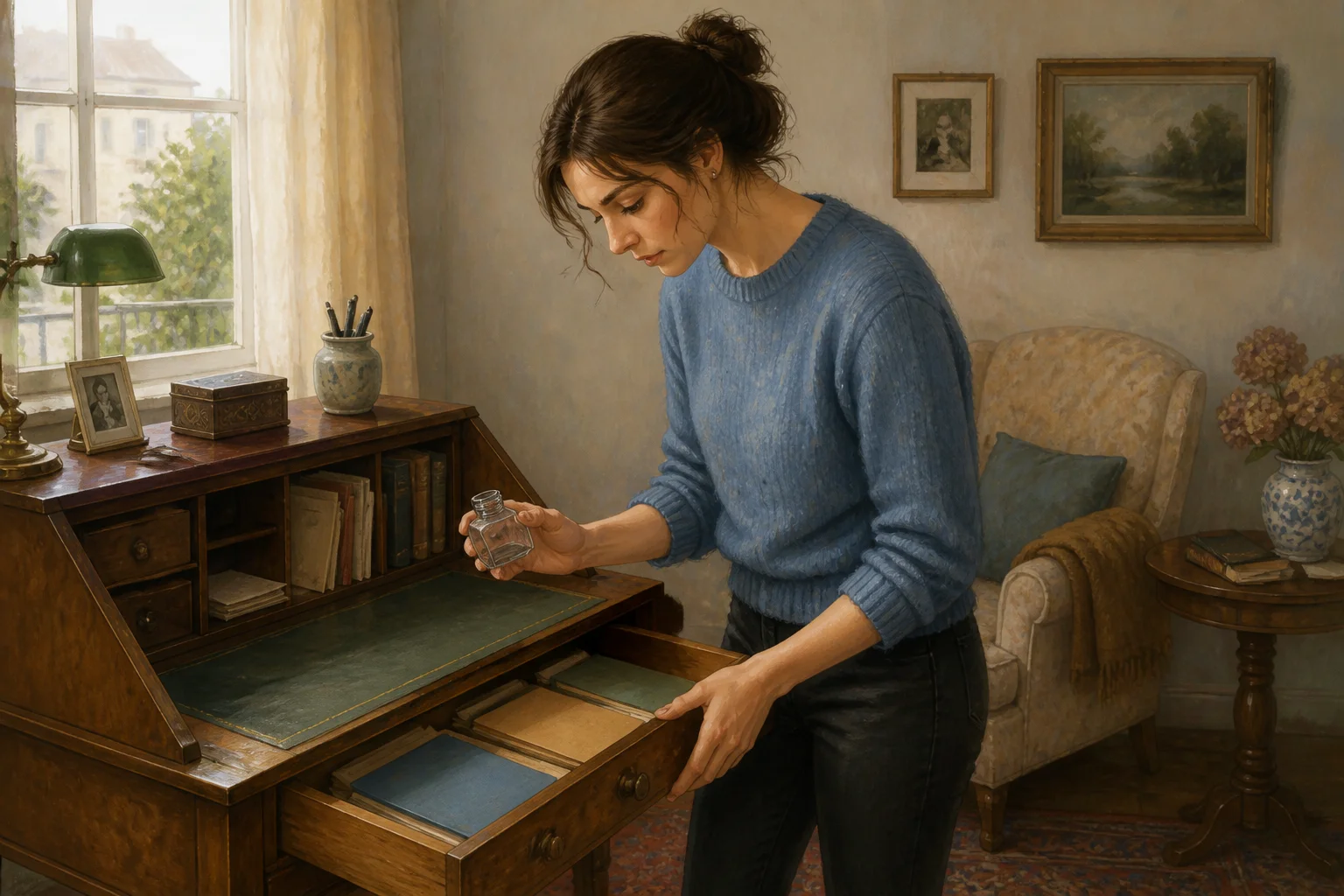
The desk was presented to Amelie as an instrument of concentration. Her aunt, a novelist of formidable discipline, had supposedly written at it every morning for forty years. The family delivered it with the reverence normally reserved for an object expected to improve its recipient by proximity.
Amelie, who had written little since accepting a demanding job, placed it beside the window and felt immediately unequal to it. Its drawers contained neatly labelled folders, an empty ink bottle and several elastic bands of no evident historical significance.
For weeks she avoided the chair. Anything written there would invite comparison with the aunt's celebrated routine. Then a drawer jammed, and in removing it she found a thin notebook behind the frame.
It contained no lost masterpiece. There were shopping lists, starts abandoned after a sentence and increasingly elaborate calculations of how much time might be saved by moving the kettle upstairs. Several pages described days on which nothing had been written.
Amelie felt an unseemly relief. She wanted to show the family, then hesitated at the prospect of replacing one convenient legend with another. Her aunt's discipline was not disproved by reluctance. The novels still existed; someone had written them in spite of the mornings recorded here.
She put the notebook in an accessible drawer. The next day she sat down for twenty minutes and produced a paragraph she disliked. There was no consoling revelation, only a sentence whose second half seemed worth keeping.
When her cousin asked whether the desk was helping, Amelie said it was. She did not explain that its assistance had begun when it ceased to resemble evidence for the prosecution.
Las palabras de los párrafos que lees se añaden a Vistas una vez por texto y día UTC. Es una estimación de exposición, no de comprensión.
Comprueba tu comprensión
Ficción original creada con ayuda de IA. Los niveles del MCER son orientativos.