
The Benefactor's Chair
Chạm vào một từ để dịch và lưu lại luyện tập.
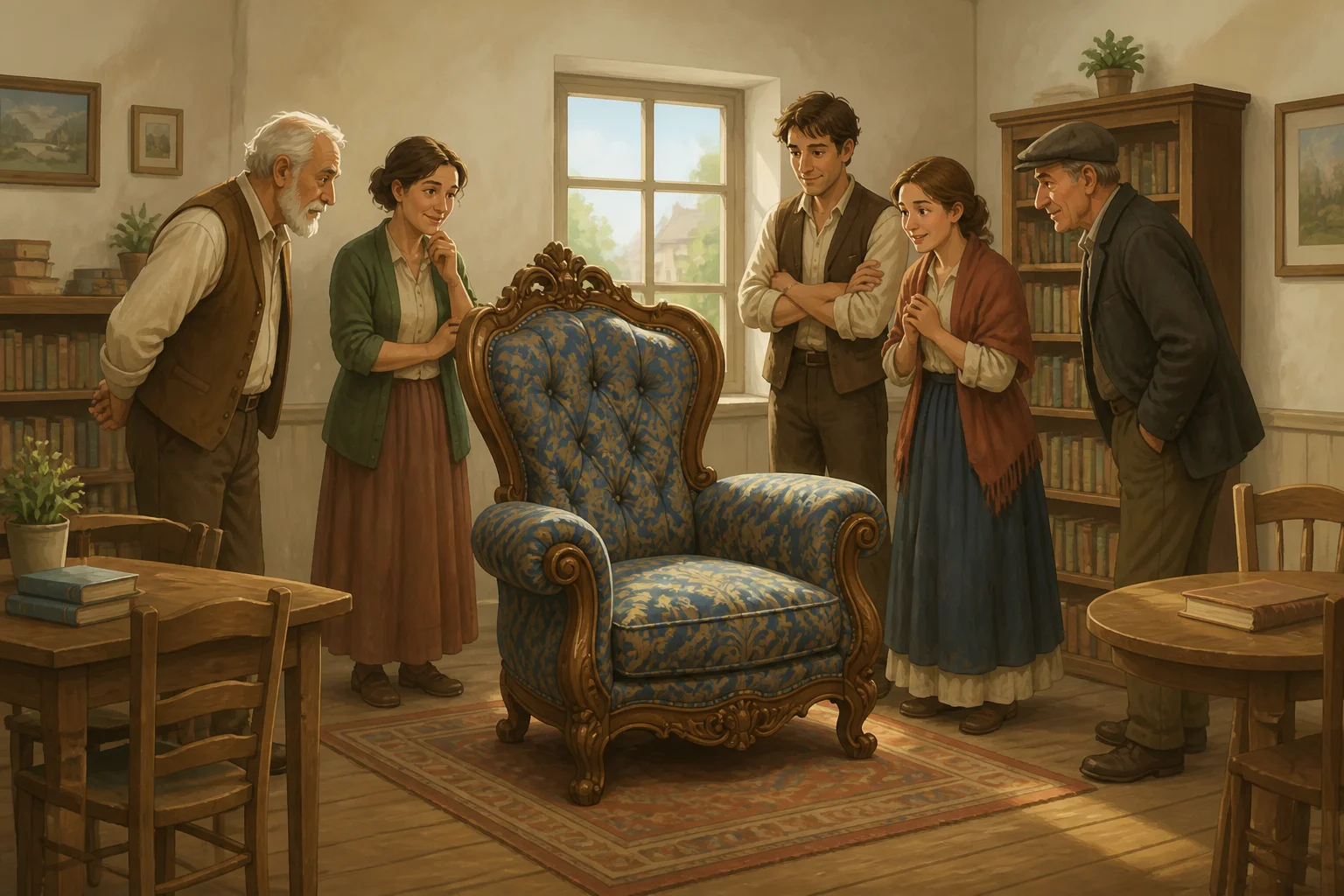
The chair arrived before the benefactor's letter and was therefore admired without reservation for approximately twenty minutes. It was handsome, improbably large and upholstered in a fabric that made the reading room's existing furniture look apologetic.
The letter explained that the chair had belonged to the donor's father, whose commitment to public education the gift was intended to commemorate. A brass plaque would follow. The chair should, if practicable, occupy a prominent position. That final qualification was repeated in subsequent correspondence with an insistence which gradually deprived it of meaning.
As volunteer coordinator, Mae accepted that generosity deserved acknowledgement. She was less certain it entitled a piece of furniture to displace the low table used by children after school. The chair could be moved, but its symbolic weight increased with every attempt.
At a meeting, someone proposed refusing it. Someone else asked whether the room could afford the reputation of being ungrateful. Thus a question about floor space became a referendum on the moral character of the village.
Mae visited the donor. She brought photographs of the room on an ordinary afternoon, including one in which a child balanced a workbook on his knees beside the magnificent chair. The donor studied this picture for longer than she expected.
"My father hated being put on a pedestal," he said.
Mae had no means of verifying the claim and no desire to obstruct its usefulness. Together they chose a quieter corner for the chair and a smaller plaque.
At the reopening, the donor described the new arrangement as exactly what he had envisaged. Mae thanked him. The children had their table back.
She wondered afterwards whether tact was merely the art of allowing a convenient fiction to do an honest piece of work. It was not a definition she would have put on a plaque.
Từ trong đoạn bạn dành thời gian đọc được thêm vào Đã gặp, một lần mỗi văn bản mỗi ngày UTC. Đây là ước tính tiếp xúc, không phải mức độ hiểu.
Kiểm tra đọc hiểu
Truyện hư cấu nguyên bản có hỗ trợ AI. Trình độ CEFR chỉ là ước tính.