
The Unclaimed Applause
So‘zni tarjima qilish va mashq uchun saqlash uchun ustiga bosing.
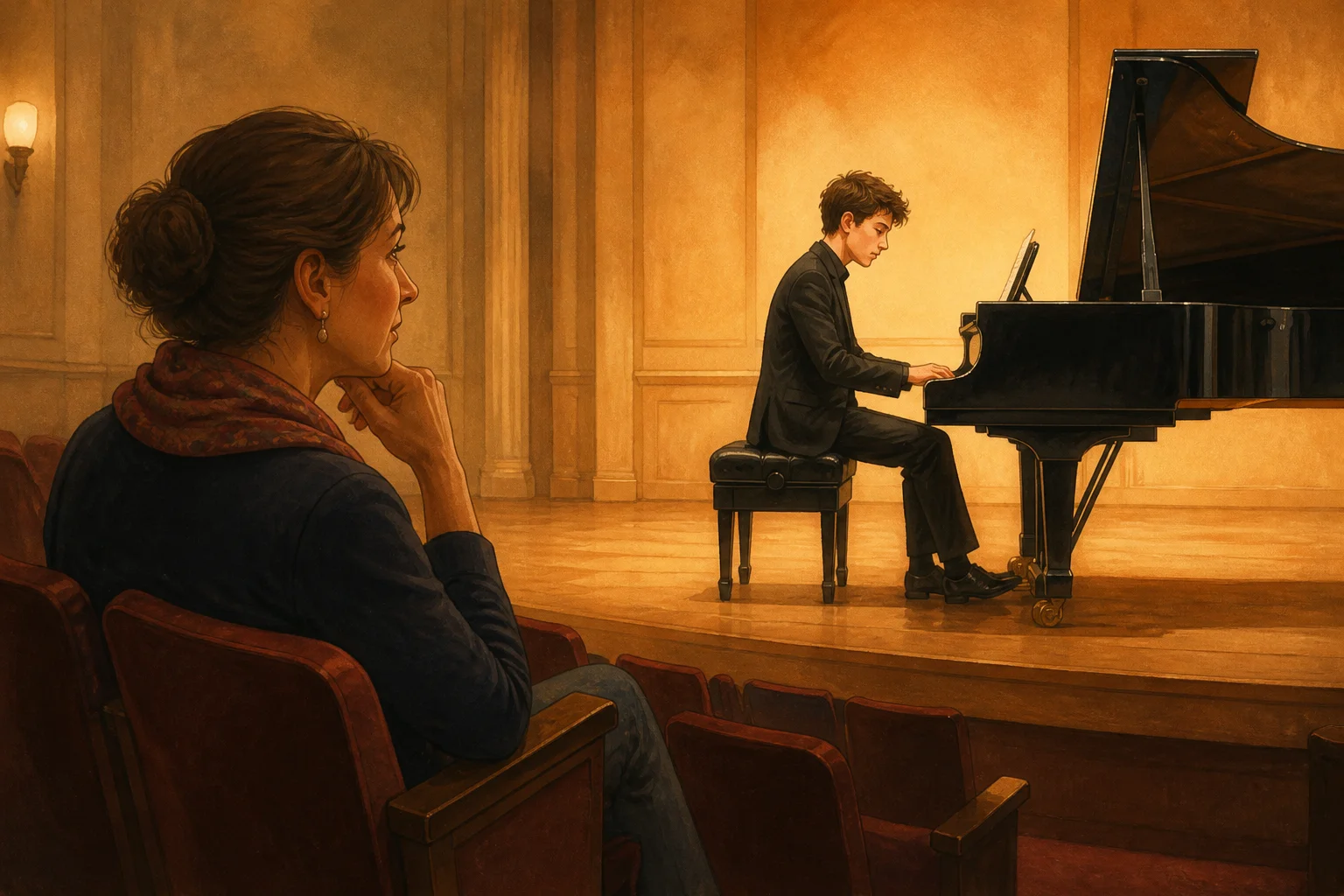
Clara had not heard her former pupil perform for almost a decade. At sixteen, Tomas had played with a precision that made adults call him promising, a word Clara had learned to use cautiously. Promise could become a room that other people expected you never to leave.
At the concert, his playing was less tidy than she remembered and far more absorbing. He allowed some phrases to hover, as though the next note had not yet been decided. Clara found herself mentally offering corrections and then withdrawing them.
Afterwards, a journalist asked Tomas which teachers had shaped his approach. He mentioned a pianist abroad and a brief conversation with a street musician. Clara's name did not arise.
She was embarrassed by how much she noticed. She had never taught him to perform as he did now. In fact, she might once have discouraged several of the choices she had just admired. Yet she had given him the technical security from which, she believed, those choices had become possible.
Tomas found her near the exit and seemed genuinely delighted. He remembered her insistence that he listen before starting a difficult passage.
"I still do that," he said. "Only now the silence lasts longer."
On the journey home, Clara considered whether this was recognition or merely kindness. There was no reliable test, and perhaps she did not need one.
She had wanted to hear evidence of her teaching. What she had heard was a musician who no longer needed to sound like her pupil.
O‘qishga vaqt ajratgan paragraflaringizdagi so‘zlar har bir matn uchun UTC kunida bir marta Ko‘rilganlarga qo‘shiladi. Bu tushunish emas, uchratish taxmini.
Tushunganingizni tekshiring
AI yordamida yaratilgan original badiiy hikoyalar. CEFR darajalari taxminiy.