Could not verify this AI request. Please try again.Complete this check to generate.hideshowCloseNo documentaries match these filters.{0} minAllComedyDocumentaryDramaFantasyFood & CultureHistoryHorrorNature & AnimalsPeople & WorkRomanceScience & MindThrillerUncategorizedDismiss guideDoneHow to learn with this videoSave it for practicePress + in the translation to save a word and review it later. No account needed.Your word is saved. Try a short quiz, then review your saved words on your next visit.Start my first session →Start hereWatch, translate a subtitle word, and save it to practise later. You can start watching without an account.One short video. One useful new word.Your first learning sessionTranslate a wordPress play, then click or tap an English subtitle word to translate it. Choose your translation language in the popup.Watch 30 secondsYour progress is linked to this browser. Clearing site data may remove access.Continue at {0}Continue watchingWords ready to review: {0}Could not load your next session. Please try again.Try a film now. You can create an account later.Finding your next story…Your next storyNo new film matches these choices. Try another level or genre.A story for your level and interestsKeep your words freshCreate a free accountPick up where you left offReview saved wordsRevisit words you saved from the stories you watched.Keep your progressCould not save your choices. Please try again.Your choices are saved to your account.Start this filmB2–C1 · AdvancedA1–A2 · BeginnerB1–B2 · IntermediateNo movies found. Try a different filter or sort.Could not load movies. Please try again.Loading more movies…No image{0} viewsWatch {0}Words by levelLoading…NextCreate or sign in to your account to activate your Premium benefits.Get higher daily allowances with Premium.Limit reachedPlease sign in to subscribeSubscribeAutomatic subtitlesEnglishExit fullscreenFullscreenNo translated subtitles are available for this video.AutomaticChoose a language to show it under English. Choose it again to turn it off.OffYour selected language is unavailable for this video. English remains on.Subtitle languageCompare Free and Premium →€2.99/month or €19.99/year, billed annually.Create up to {0} AI texts from your words and {1} story pictures per day.Keep learning with PremiumGet a higher daily translation allowance and create more AI texts and pictures from your words.PreviousCreate a free account to keep your progress across devices.Use all the words before checking.Questions in your practice: {0} / {1} · All levels.Correct answer: {0}Find another filmCheckChoose a level, then start a short quiz. Retrying questions is always free.Quiz completeCorrect!No questions at this level yet. Try another level.Could not save your answer. Please try again.Suggested level: {0}First try: {0} / {1}Read subtitle (hint)Not quite. Try again.Could not load the quiz.Loading quiz…Type the missing word(s)…Review mistakesPractise {0} moreNo new questions at this level. Try another level or review your questions.No questions in your practice match this level. Choose All levels to review them.Click the words to build the sentence.Question {0} / {1} · Correct: {2}Question {0}Replay scene · {0}Try this question againTry againLevel: {0}Round {0}Round completeYour latest answers: {0} / {1} correctStart {0}-question quizBest responseScene comprehensionMissing wordFill the gapMeaningSame meaningWord orderAgainAgain makes this word due today. Reopen Study words to review it again.Review complete! Words rated Again are still due today. Reopen Study words whenever you are ready.EasySave a word from a subtitle, or add your own word above to start practising.HardCould not load your words. Try Study words again.Getting your words ready…MediumNext reviewNo words are due right now. Come back later, or save a new word to practise.Could not save your rating. Please try again.Study wordsTodayCould not update the word total. Try the session summary again.Create a free account to save words and track your progress.Minutes watched: {0}Practise with this film’s quizSaving your vocabulary…Your watching sessionView your vocabularyNew words encountered: {0}Practise againAudio is unavailable in this browser.Browse vocabulary sets by topicCheck answerEveryday English{0} words and phrases · {1} topicsWell done!Which English word fits?Show answerEnter the English wordRound complete!FlashcardsShow meaningGuessProgress is saved for this browser. Sign in to keep it across devices; clearing site data may remove access.Reveal a letterLetter hint: {0}A little practice for everyday English. Pick a topic and try to recall the word.Enable JavaScript to practise these vocabulary sets.AdvancedAll levelsBeginnerIntermediateDifficultySuggested practice difficulty; individual words and videos may be easier or harder.ListenCould not load the word sets. Please try again.Practice modeNext word →Next roundNext topic →Card {0} of {1}Word practice{0} / {1} practisedDifferent words practised in this topicProgress counts different words practised. Hints and revealed answers count as practice, not unaided recall.Can you remember the meaning?I rememberPractise this topic againTry againCome back later to check what you remember. Practised does not mean mastered.Read the answer and example. You can save this word for another review.Words per roundSave to practiseCould not save. Please try again.Saved ✓Added to Saved words with its English meaning and example.{0} of {1} words marked as remembered this round.{0} of {1} words recalled without hints or retries this round.Vocabulary setsEveryday actionsAnimals & wildlifeNature & the environmentFamily & peopleFeelings & personalityFood & drinksHealth & bodyHome & everyday lifeOpinions & decisionsCommon phrasal verbsRelationships & conversationsSchool & learningScience & spaceShopping & moneyNews & societyFilms & storytellingTechnology & the internetTravel & transportWeather & seasonsWork & jobsChoose a topicContinue learning with a video related to this topic.Practise, then watchCorrect — with a little help. Try recalling it again later.Not quite. Try again, reveal a letter, or show the answer.A recording of a LearnMovies quiz with answer choices and feedbackA recording of subtitle translation and saving a word in LearnMoviesCheck your understanding with questions from the movie.Press + in the translation to save a word and review it later. No account needed.Pause demoPause demo animationPaused product demonstrationPlay demoPlay demo animationBeginner vocabulary · English subtitlesShow all stepsPause walkthroughPlay walkthroughStep {0} of {1}Correct.Not quite.{0} of {1} correct.Continue to Saved WordsThat word is already saved. Choose another word from the text for this tour.Check answerClose tourTour completeContinue to reviewContinue readingThis scene is paused. Hover over or tap “worried”, or any other subtitle word. Choose your translation language if asked.Try the guided demo1 · Try a wordDoneRead, translate, save and review. Use word packs or AI texts whenever you want more practice with your words.You have a learning routineWelcome bonus earned: +50 XP, plus your review XP.Could not start the tour. Try again.Finish tourContinue on the practice pageTry a short guided reading exercise.Learn your first wordMaybe laterOpen Saved Words to try recalling its meaning. We will put your new word first in the review queue.Open Saved Words →Your word is savedOptional · AI practiceOptional · Quick questionGet a word pack with example sentences and a dialogue. A new pack uses your daily allowance; an existing pack can be opened again. You can skip this step.Read how the word is used in sentences and a dialogue. You can also open the exercises. Continue when you are ready to rate your recall.Explore the examplesSee your word in contextTry one question about the text. A correct first attempt earns +10 XP. You can skip it and still complete the tour.Try one questionRead the explanation, then continue to practise your saved word.Learn from the answerCheck what you understoodChoose Again, Hard, Medium or Easy honestly. The times show when you will review it again. Every rating earns the same review XP.How well did you remember?Read a few lines. Click a word you would like to learn; the highlighted word is a suggestion. Choose your translation language if asked.Read, then choose a wordResume tourWhat does this word mean? Think of the answer, then reveal the translation to check yourself.Try to remember firstComplete this saved-word review for a one-time +50 XP welcome bonus—enough to reach Level 2.Read the translation, then press Save to practise. It will keep the word and its sentence in Saved Words.Keep this wordShow me howSkip AI stepSkip questionSkip tourTake a quick tour3 · Practise1 · Read2 · Save1 · WatchPress Study words. Your saved word comes first.Start a real reviewWatch a short scene, then hover over or tap an English subtitle word to translate it. If no words appear, use the subtitle menu to turn on English. Choose your translation language if asked.Try a subtitle wordChoose your words, level, topic and format, then press Generate my text. This uses your daily text allowance. A selected picture also uses your picture allowance. Nothing is generated until you press the button.You have completed a real word review. Now you can create an AI text from your saved words, or finish the tour here.Create something with your wordsMake a text you want to readWatch, translate, save and review. Use word packs or AI texts whenever you want more practice with your words.Read the translation, then press the + button in the popup. This saves the word and its subtitle sentence for practice.Press Watch now, or choose an episode. If the player is already open, press its play button. You stay on this video throughout the first steps.Start a videoWatch a videoCould not verify this translation request. Please try again.Complete this check to translate.Not nowChoose a languageUse this language for word translations and automatic second subtitles, when available.Translation languageYou can change this later. Your website language stays the same.Save preferenceWhich language would you like translations in?Website languageNo words at this level yet. Watch a video or read a library text to get started.Encounters: {0} · Movies / episodes: {1}Could not save or load your vocabulary. Please try again.Estimated {0}Suggested level based on usage; not individually verified in a CEFR reference.Frequently encounteredHide translationI know this wordI know this word: {0}{0}: {1} seen, {2} frequently encountered, {3} remembered of {4} listed words. Browse words.{0} · Page {1} of {2} loaded.Loading encounters…Loading translation…Loading words…{0} marked as remembered.Load more encountersNo encounters available.Open saved words →Page {0}Paragraph {0} · {1}Hear pronunciation{0}–{1} of {2} words · Page {3} of {4}Read {0} in {1}, paragraph {2}RememberedRetry loading encountersRetry translationCould not save this word. Please try again.Save to practiseProgress saved.Saved for practiceSearch languagesSelect languageYour session expired. Sign in again to view your vocabulary.Show translationEncounters: {0} · Videos / texts: {1}Your vocabulary journey starts with your next video or text.Show translation for {0}Could not load the translation. Please try again.Your daily translation limit has been reached. Try again tomorrow.{0} of {1} translations left todayUndoRemove remembered mark for {0}{0} removed from remembered.Watch {0} in {1} at {2}Your wordsAdd a wordEnter an English word. We’ll translate it into your chosen language; you can edit the translation.ChangeAdd an English word, its translation or meaning, and optionally an example sentence.Translation languageExample sentence (optional)Translation or meaningEnglish wordAll popcorn avatars unlocked!DirectorHappy PopcornLittle KernelMovie BuffBook LoverFirst PopChoose your popcorn avatarDaily bonus +15Daily bonus earned · +15 XPChoose avatarClose{0}/5 learning activities · +15 XP daily bonus+{0} XPCould not update your progress. Please try again.Free for everyone. Premium does not increase XP.Level {0}You reached Level {0}!Unlocks at Level {0}Activity levels celebrate practice. They are separate from your A1–C2 English level.Next avatar: {0} · Level {1}Next XP review: {0}Progress to next activity level{0} XP to Level {1}Quiz XP is awarded once per question. Word XP returns when a review is due; repeated same-day reviews do not earn more. Adding words, marking words known and generating AI content do not earn XP.Complete five different learning activities in a day: +15 XP. Days reset at midnight UTC.Correct Guess answer: +10 XP, or +5 with a letter hint.Correct video or story quiz answer on the first attempt: +10 XP.Scheduled flashcard review: +3 XP for every rating, including Again. Choose honestly.How to earn XPSelectedYour popcorn journey{0} total XPRead againBalanced · 95%A text or feedback is being generated. Please wait.Challenging · 90%Get feedbackCreate a story with my wordsMy own topicCustom mixDeleteDelete this saved text and its reading history? Your daily generation allowance will not reset.Text deleted.DialogueToo easyYour first story will appear here.Could not complete this request. Check your connection and settings, then try again.Estimated from remembered words and vocabulary at your target level. Seen does not mean known. The final mix may differ from your request.Everyday lifeEstimated familiar vocabularyYour answer adjusts vocabulary familiarity for your next text.Saved. Your next text will use the updated vocabulary setting.FormatGenerate my textCreating your text or feedback…Generation failed. Your successful-generation allowance was not used. Try generating again.Too difficultHow was this text?Add a picture{0} of {1} pictures available today. Your text is ready first.Illustration for {0}AI-generated illustration · saved with your storyCheck pictureThe picture could not be created. Your story is saved and ready to read.No more pictures are available today. You can still read and create texts.The saved picture could not be loaded. Try loading it again.Creating your picture… You can read and translate words while you wait.Try creating the picture againPictures are temporarily unavailable. You can still create a text.Include a pictureTurn words from your videos into a story of your own.LengthTarget levelSaved textsYour daily generation limit has been reached. You can still reread saved texts.Long · about 400 wordsAdd one English word at a time. You can also edit the selected words above.Enter one English word, up to 48 letters, with optional apostrophes or hyphens.I have read this sectionMedium · about 200 wordsMostly familiar · 98%NatureNextThis text is unavailable or has been deleted.More optionsMore suggestionsTry using a word{0} sentence checks available todayYour practice wordsPreviousSaved privately to your library. AI-generated fiction; levels and vocabulary familiarity are estimates.{0} of {1} sections read{0} of {1} texts available todayRead and mark the section containing this word first.From my videosJust rightSaved to your private library.No saved words to practise yet. Add words in Saved Words or enter your own above.Saved words from every level are shown, except those marked Well known in Saved Words. Your selected level sets the difficulty of the text.ScienceSection readWrite your own sentenceYour session expired. Sign in again.Short · about 100 wordsFrom your readingSaved for practiceSeen in videos or readingSuggested for this level{0} saved texts · {1} completed · {2} words encountered while readingStoryTarget {0} · {1} words · estimated familiar vocabulary {2}% (requested {3}%)My readingTopicTranslate {0}Select a word to translate or save it. Mark each section after reading to keep your progress.TravelLevel not listedAdded {0} to your selected words.Choose up to 8 English words, separated by commas. Each entry should be one word.Choose suggestions or replace them. Saved words come first; words seen in videos may already be familiar.Words to practise · up to 8, separated by commas
Tap a word to translate it and save it for practice.
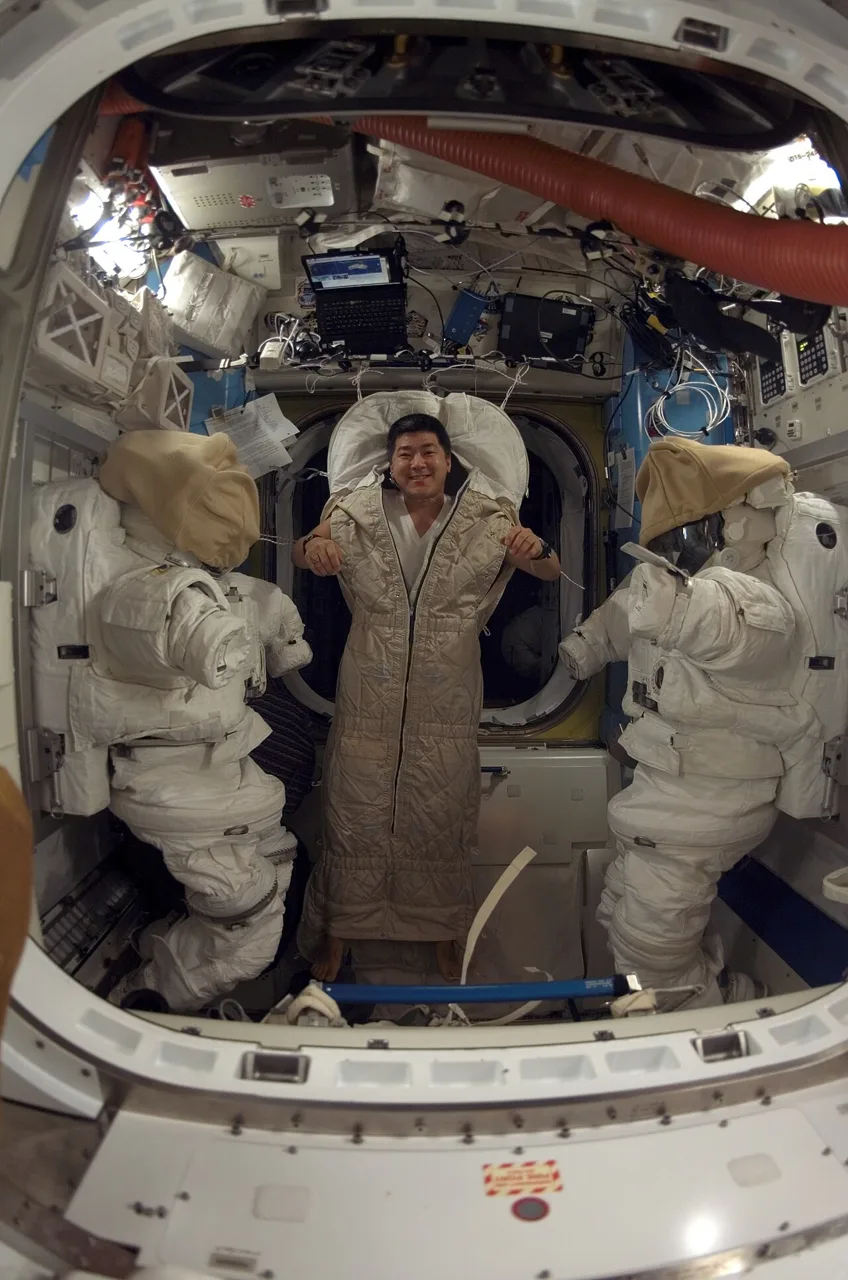
At home, you lie on a bed to sleep. On the International Space Station, an astronaut can sleep in a bag fixed to a wall. In the station’s weightless conditions, there is no need for a normal bed. The bag helps the astronaut stay in one place.
Outside the window, day and night change very quickly. The station travels around Earth about once every ninety minutes. Astronauts can see roughly sixteen sunrises in a day. They cannot go to bed at every sunset!
Instead, the crew follows a daily timetable. Work, meals and sleep have planned times. Light is important too: the lighting can help show when it is time to work and when it is time to rest.
The station is not perfectly quiet. Machines make noise, and air must keep moving. A small sleeping space gives each astronaut some privacy. Sleeping in space is different, but a familiar routine still helps.
Words in paragraphs you spend time reading are added to Seen, once per text per UTC day. This estimates exposure, not understanding.
Sources and photo
Written for English learners using the sources below.